Towing and roadside help in North Hollywood and the San Fernando Valley

Call (747) 877-8577

Category: Blogs

  • Why North Hollywood Drivers Need a Reliable Towing Company on Speed Dial

    Why North Hollywood Drivers Need a Reliable Towing Company on Speed Dial

    If you drive in North Hollywood, California, you already know that getting behind the wheel in this part of the Greater Los Angeles area comes with its own unique set of challenges. From the notoriously heavy traffic on the 101 and 170 freeways to the busy surface streets of Lankershim Boulevard and Vineland Avenue, North Hollywood drivers face road conditions every single day that put their vehicles, and their patience, to the test. And with the sheer volume of vehicles on the road at any given time in the Greater LA area, the chances of finding yourself in a roadside emergency at some point are higher than most drivers would like to admit.

    Short answer: North Hollywood drivers deal with heavy traffic on the 170, 101 and 134, tight parking and busy boulevards, so a breakdown here gets stressful fast. Saving a local towing number now means one quick call instead of searching for help on the shoulder. Save Rosario Swift Towing Services: (747) 877-8577.

    The question is not really whether you will ever need a towing company, statistically speaking, most drivers will need towing or roadside assistance at some point in their driving lives. The real question is whether you will be prepared when that moment comes. Will you have a reliable, trusted towing company’s number already saved in your phone, ready to call with confidence the moment something goes wrong? Or will you be frantically searching through unfamiliar options on the side of a busy North Hollywood road, stressed, stranded, and unsure who to trust?

    Having a reliable towing company on speed dial is one of the simplest and most practical steps any North Hollywood driver can take to prepare themselves for the unexpected. In this blog post, we explain exactly why this matters so much, and what to look for in a towing company worth keeping on speed dial.

    North Hollywood’s Roads and Traffic Present Real Challenges for Drivers

    North Hollywood sits at the heart of one of the most heavily trafficked regions in the entire United States. The Greater Los Angeles area is consistently ranked among the worst cities in the world for traffic congestion, and North Hollywood is no exception to that reality. The 101 Freeway, the 170 Freeway, and the 134 Freeway, all of which run through or near North Hollywood, are among the busiest and most congested roads in the region, particularly during the morning and evening rush hours when traffic can slow to a near standstill for miles.

    This level of traffic congestion has a direct impact on the likelihood of roadside emergencies for North Hollywood drivers. Stop-and-go traffic puts significant stress on vehicle cooling systems, increasing the risk of engine overheating. Extended periods of slow driving can drain batteries faster than normal, particularly in older vehicles. The sheer volume of vehicles on the road increases the statistical likelihood of being involved in a minor collision or fender bender. And the longer you spend on the road each day commuting through North Hollywood and the surrounding areas, the greater the cumulative wear and tear on your vehicle and its components.

    Add to this the fact that North Hollywood’s surface streets (including Lankershim Boulevard, Laurel Canyon Boulevard, Coldwater Canyon Avenue, and Vineland Avenue) carry heavy traffic volumes throughout the day, and it becomes clear that North Hollywood drivers are exposed to road conditions that make vehicle breakdowns and roadside emergencies a genuine and ongoing possibility rather than a remote or unlikely event.

    A Breakdown in the Wrong Place Can Be Dangerous and Disruptive

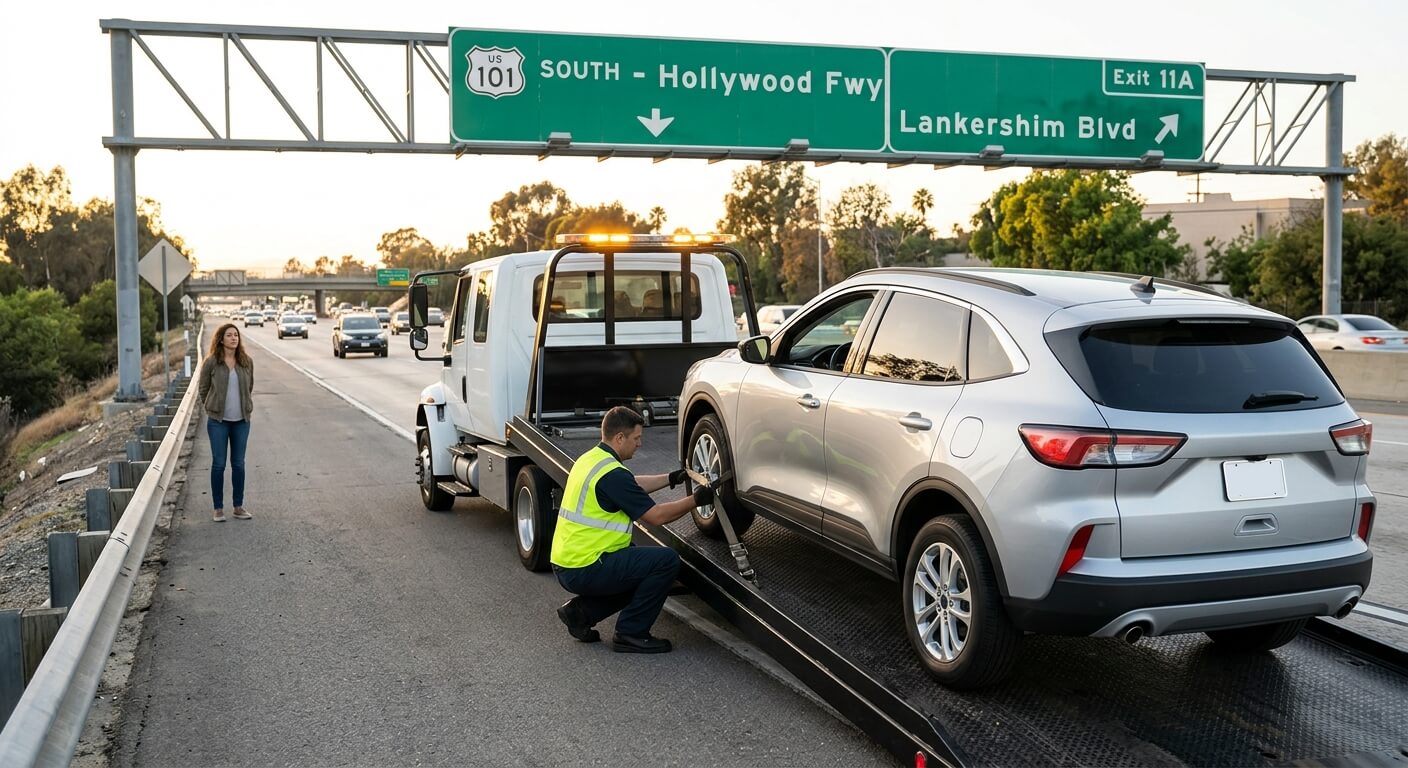
    One of the most important reasons to have a reliable towing company on speed dial as a North Hollywood driver is the simple fact that a breakdown in the wrong place at the wrong time can be genuinely dangerous. Breaking down on a busy freeway like the 101 or the 170 is a particularly hazardous situation: these are high-speed roads with heavy traffic, limited shoulder space in some sections, and very little room for error. Being stranded on or near a busy freeway without immediate access to professional assistance can put you and other drivers at real risk.

    Even breaking down on a busy surface street in North Hollywood can be a stressful and potentially dangerous situation, particularly during peak traffic hours when frustrated drivers may not give a disabled vehicle the space and caution it deserves. Being stuck in a lane of traffic on Lankershim Boulevard or Vineland Avenue during rush hour with no idea who to call is a situation no driver wants to find themselves in.

    Having a trusted towing company’s number already saved in your phone means that in these situations, you can make one quick call and have professional help on the way: rather than spending precious time searching for options while stressed, stranded, and potentially in a dangerous position on a busy road.

    The Greater LA Area Is Large: Response Time Matters Enormously

    Another critical reason North Hollywood drivers need a reliable local towing company on speed dial is the sheer size of the Greater Los Angeles area. Los Angeles is one of the largest metropolitan areas in the United States, covering an enormous geographic footprint. A towing company that is based far from North Hollywood may take a very long time to reach you, particularly during peak traffic hours when travel times across the Greater LA area can be significantly longer than normal.

    When you are stranded on the side of a busy road, every minute of waiting feels like an eternity. The longer you wait for help to arrive, the longer you are exposed to the risks and stresses of being stranded in traffic. Choosing a locally based towing company (one that is based in or near North Hollywood and knows the local roads, traffic patterns, and neighborhoods well) means you can expect a significantly faster response time than you would get from a company that has to travel a long distance to reach you.

    A local North Hollywood towing company also has the advantage of familiarity with the area. They know which roads are most likely to be congested at which times of day, which routes are fastest for getting to common breakdown locations in the area, and which repair shops and facilities in North Hollywood and the surrounding communities are reputable and accessible. This local knowledge translates directly into faster, more efficient service when you need it most.

    Emergencies Are Stressful: Having a Plan Makes All the Difference

    There is a significant psychological benefit to having a reliable towing company already identified and saved in your phone before an emergency ever happens. Roadside emergencies are inherently stressful situations: your vehicle is not working, you may be in an unfamiliar or unsafe location, you may be running late for an important appointment, and you may have passengers with you who are also stressed and anxious about the situation.

    In this kind of high-stress environment, having to stop and research towing companies (reading reviews, comparing options, and trying to make an informed decision about who to call) adds an additional layer of stress and mental load at exactly the moment when you have the least capacity to deal with it. It also takes time that could be better spent getting yourself and your vehicle to safety.

    On the other hand, if you already have a trusted towing company’s number saved in your phone, the decision is already made. You make one call, you know help is on the way, and you can focus your attention on staying safe while you wait. That peace of mind is genuinely valuable, and it costs nothing more than a few minutes of preparation before an emergency ever happens.

    Not All Towing Companies Are Created Equal

    Another important reason to identify and save a reliable towing company’s number before you need one is the simple fact that not all towing companies provide the same level of service. In the Greater Los Angeles area, there are many towing companies to choose from, and the quality of service, response times, pricing practices, and professionalism varies considerably between them.

    Some towing companies in the LA area have unfortunately developed a reputation for predatory pricing practices, quoting one price over the phone and then presenting a significantly higher bill once the job is done, or adding on unexpected charges that were never disclosed upfront. Others may have slow response times, poorly maintained equipment, or operators who do not handle vehicles with the care and professionalism they deserve.

    When you are stranded on the side of the road and searching for a towing company in a hurry, you are not in the best position to carefully evaluate your options and make an informed choice. The pressure of the situation can lead to calling the first company that comes up in a search, which may not be the most reliable or trustworthy option available.

    By taking the time to research and identify a reputable local towing company before you ever need one (reading reviews, checking their reputation, and getting a sense of their pricing practices and range of services) you can make a calm, informed decision rather than a hasty one driven by stress and urgency. And once you have found a company you trust, saving their number in your phone means you are ready to call them with confidence the moment you need help.

    What to Look for in a Towing Company Worth Keeping on Speed Dial

    Not every towing company deserves a spot on your speed dial. Here are the key qualities to look for when choosing a towing company to keep on hand as a North Hollywood driver:

    Local Knowledge and Presence: Choose a towing company that is based in or near North Hollywood and knows the local roads, traffic patterns, and repair facilities well. A local company will almost always be able to reach you faster than one based further away, and their knowledge of the area translates into more efficient and effective service.

    Fast Response Time: Response time is one of the most critical factors in a towing situation. Look for a company that prioritizes fast dispatch and keeps you informed of their estimated arrival time so you are never left wondering when help is coming.

    Comprehensive Range of Services: The best towing companies to have on speed dial are those that offer a full range of towing and roadside assistance services: not just basic towing, but also jump starts, flat tire changes, fuel delivery, car lockout service, winch outs, and more. This means that whatever type of roadside emergency you face, you only ever need to make one call.

    Transparent and Honest Pricing: Look for a company that is upfront and clear about their pricing before any work begins. A trustworthy towing company will give you a clear quote and explain any additional charges that may apply to your situation without any hidden surprises.

    Positive Reputation and Reviews: Take the time to read reviews from other North Hollywood drivers who have used the company’s services. Consistent positive feedback about professionalism, response time, and quality of service is a strong indicator of a company worth trusting.

    Friendly and Professional Team: The best towing companies treat every customer with genuine respect, care, and professionalism, from the first phone call to the moment your vehicle is safely delivered. Look for a company whose team is known for being friendly, helpful, and genuinely focused on making a stressful situation as easy as possible.

    Rosario Swift Towing Services: North Hollywood’s Reliable Towing Company

    At Rosario Swift Towing Services, we are proud to be one of North Hollywood’s trusted local towing companies. We know the roads of North Hollywood and the surrounding Greater Los Angeles area inside and out, and we are committed to providing fast, professional, and reliable towing and roadside assistance services to drivers throughout our community.

    Whether you need light-duty towing for your passenger car, medium-duty towing for a larger vehicle, heavy-duty towing for a commercial truck, flatbed towing for a luxury or all-wheel drive vehicle, or any of our roadside assistance services including jump starts, flat tire changes, fuel delivery, car lockout service, and winch outs. We have the equipment, the experience, and the team to handle it quickly and professionally.

    We believe in transparent, honest pricing with no hidden surprises, fast response times that respect the urgency of your situation, and the kind of friendly and professional customer service that makes a genuinely stressful experience as smooth and manageable as possible. When you call Rosario Swift Towing Services, you can have complete confidence that help is on the way and that your vehicle will be handled with the utmost care and professionalism from start to finish.

    What to Save in Your Phone Today

    It takes two minutes, and it makes a bad day much easier:

    • Our number, (747) 877-8577, saved as a contact
    • A photo of your insurance card and registration
    • Your car’s year, make and model, and whether it’s all-wheel drive
    • Your mechanic’s name and address, so we know where to take the car
    • Your roadside membership number, if you have one

    Save Our Number Today: Before You Need It.

    Don’t wait until you are stranded on the side of a busy North Hollywood road to start thinking about who to call. Save Rosario Swift Towing Services in your phone right now, (747) 877-8577, and have peace of mind knowing that when a roadside emergency strikes, you have a trusted, local, and professional towing company just one call away. We serve North Hollywood and the surrounding Greater Los Angeles area, and we are here when you need us most.

    Frequently Asked Questions

    What areas around North Hollywood do you serve?

    North Hollywood and nearby Valley neighborhoods, including Studio City, Valley Village, Toluca Lake, Burbank, Sun Valley, Van Nuys and Sherman Oaks.

    What can I call you for?

    Towing for cars, vans, box trucks and semis, flatbed towing, winch-outs, flat tire changes, jump starts, car lockouts and fuel delivery.

    Will you tell me the price before you send a truck?

    Yes. We give you the price on the phone before the truck comes.

    What should I tell you when I call?

    Your location, your vehicle, what happened and where you want it to go.

    Related Services

    Need a Tow in North Hollywood?

    (747) 877-8577

    Available day and night. Or send a quote request and we’ll call you back.

  • What to Do If Your Car Overheats on the Road: A Step-by-Step Guide

    What to Do If Your Car Overheats on the Road: A Step-by-Step Guide

    An overheating engine is one of the most serious and potentially costly mechanical problems a driver can face on the road. Unlike a flat tire or a dead battery, which are frustrating but relatively straightforward to deal with, an overheating engine can cause severe and permanent damage to some of the most expensive components in your vehicle if it is not handled quickly and correctly. In the worst cases, a severely overheated engine can result in a warped cylinder head, a blown head gasket, or even a completely seized engine, repairs that can cost thousands of dollars or potentially write off the vehicle entirely.

    Short answer: If your temperature gauge climbs, turn off the AC, turn the heater on high and pull over as soon as it’s safe. Turn off the engine, and don’t open the hood or the radiator cap until it cools. If the car keeps overheating, or you see steam or leaking coolant, don’t drive it. Call (747) 877-8577 for a tow.

    The problem is that many drivers are simply not sure what to do when their temperature gauge starts climbing toward the red zone or when they see steam rising from under the hood. The instinct for some is to keep driving and hope the problem resolves itself, while others may pull over immediately but then make decisions that unintentionally make the situation worse. Neither of these approaches is ideal, and both can result in significantly more damage to the engine than would have occurred with the right response.

    In the Greater Los Angeles area, overheating is a particularly common problem. The combination of heavy stop-and-go traffic, high ambient temperatures, long commutes, and the demanding conditions of driving in a densely populated urban environment puts significant stress on vehicle cooling systems. Understanding what to do when your car overheats, and acting on that knowledge quickly and calmly, can be the difference between a manageable repair and a catastrophic engine failure.

    In this guide, we walk you through exactly what to do if your car overheats on the road, step by step, so you are prepared to handle the situation correctly if it ever happens to you.

    How to Recognize That Your Car Is Overheating

    Before diving into what to do, it is worth understanding how to recognize the signs of an overheating engine, because catching the problem early gives you the best chance of preventing serious damage. Here are the most common warning signs that your engine is overheating:

    Temperature Warning Light or Gauge: The most obvious and direct indicator of an overheating engine is the temperature warning light on your dashboard, usually a red thermometer symbol, illuminating, or your temperature gauge climbing into the red zone at the far right or top of the gauge. Most vehicles have a temperature gauge that normally sits somewhere in the middle of its range during regular driving. If you notice the gauge climbing significantly higher than usual, or if the warning light comes on, treat it as an immediate warning sign that requires action.

    Steam Coming From Under the Hood: If you see steam or smoke rising from under the hood of your vehicle, your engine is almost certainly overheating. This steam is typically coolant that has boiled and is escaping from the cooling system. If you see steam, you need to pull over immediately.

    Unusual Smells: An overheating engine can produce a sweet, syrupy smell from boiling coolant, or a burning smell from engine components that are getting too hot. Either of these smells while driving is a warning sign worth taking seriously.

    Reduced Engine Performance: In some cases, an overheating engine may cause the vehicle to feel sluggish, lose power, or run roughly as the engine management system attempts to protect the engine by reducing performance.

    Ticking or Knocking Sounds: An engine that is running significantly hotter than normal may begin to produce unusual ticking, knocking, or pinging sounds as metal components expand beyond their normal operating tolerances.

    Step 1: Take the Warning Signs Seriously and Act Immediately

    The single most important thing to understand about an overheating engine is that time is of the essence. Every additional mile you drive with an overheating engine increases the risk of serious and potentially irreversible damage. Many drivers make the mistake of thinking they can push through to their destination or to the nearest service station before dealing with the problem, and this decision often turns what could have been a minor and relatively inexpensive repair into a catastrophic engine failure.

    The moment you notice any of the warning signs described above (whether it’s the temperature warning light, the gauge climbing into the red, steam from under the hood, or an unusual smell) you need to begin taking action immediately. Do not ignore these signs, do not hope they will go away on their own, and do not keep driving as if nothing is wrong. Act quickly, stay calm, and follow the steps below.

    Step 2: Turn Off the Air Conditioning and Turn On the Heater

    This may sound like a strange and uncomfortable piece of advice, but it is a well-established and effective technique for reducing engine temperature in the short term. Your vehicle’s air conditioning system puts additional load on the engine, which generates more heat at exactly the moment when you need to be reducing the heat load on the engine as much as possible. Turning off the air conditioning immediately reduces this extra load and gives the cooling system a better chance of bringing the temperature back under control.

    Taking this one step further, turning on the heater, and setting it to the highest heat and fan settings, actually draws heat away from the engine and into the passenger cabin, acting as an additional radiator and helping to reduce engine temperature more quickly. Yes, this will make the interior of the vehicle very hot and uncomfortable, but it is a temporary measure that can buy you valuable time to get the vehicle safely off the road before serious damage occurs.

    Step 3: Pull Over Safely and Turn Off the Engine

    As soon as it is safe to do so, begin moving your vehicle toward the right side of the road and pull over in a safe location as far from traffic as possible. If you are on a freeway, follow the same procedure outlined in our guide to handling a flat tire on the freeway: gradually reduce speed, signal your intention to move right, and guide the vehicle smoothly and calmly to the shoulder or the nearest safe stopping area.

    Once your vehicle is safely stopped, turn off the engine immediately. Running a severely overheating engine even for a short additional time can cause significant damage, so shutting it off as soon as you are safely stopped is critical. Turn on your hazard lights to make your vehicle visible to other road users, apply the parking brake, and step away from the vehicle if it is safe to do so.

    Step 4: Do Not Open the Hood Immediately

    Once you have pulled over and turned off the engine, resist the urge to immediately open the hood to investigate. When an engine overheats, the coolant in the cooling system can reach extremely high temperatures and build up significant pressure. Opening the hood too soon after the engine has been running hot exposes you to the risk of being sprayed with scalding hot coolant or steam if any part of the cooling system releases pressure suddenly.

    Wait at least 15 to 20 minutes after turning off the engine before opening the hood. This gives the engine time to begin cooling down and the pressure in the cooling system time to reduce to a safer level. During this waiting period, stay a safe distance from the vehicle if you can smell burning or see steam, and do not attempt to remove the radiator cap or touch any part of the cooling system.

    Step 5: Check the Coolant Level Carefully

    After waiting at least 15 to 20 minutes and the engine has had time to cool down somewhat, you can carefully open the hood to check the coolant level. Before doing anything else, locate the coolant reservoir, a translucent plastic tank connected to the radiator, typically with a brightly colored cap marked with a warning symbol. Check the coolant level against the minimum and maximum markers on the side of the reservoir.

    If the coolant level is low or empty, this is likely a significant contributing factor to the overheating. If you have a bottle of coolant or even clean water available, you can carefully top up the coolant reservoir to the maximum level as a temporary measure. However, it is critically important that you only do this after the engine has cooled down sufficiently, never add cold water or coolant to a hot engine, as the sudden temperature change can cause thermal shock and crack the engine block or cylinder head.

    Even if topping up the coolant allows you to restart the vehicle, this is only a temporary fix. A low coolant level indicates that there is a leak or another problem with the cooling system that needs to be properly diagnosed and repaired by a qualified mechanic as soon as possible.

    Step 6: Do Not Restart the Engine Until It Has Cooled Down

    Once you have turned off an overheating engine, do not attempt to restart it until you are confident it has cooled down sufficiently. Restarting a hot engine before it has had time to cool can cause additional damage and may trigger another overheating episode almost immediately, leaving you in a worse position than before.

    A general guideline is to wait at least 30 minutes after the engine has been turned off before attempting to restart it, though longer is better if the situation allows. If you do attempt to restart the engine after it has cooled, watch the temperature gauge very carefully. If it begins climbing toward the red zone again quickly, turn the engine off immediately and call for assistance. Do not attempt to drive to your destination if the engine continues to overheat after restarting.

    Step 7: Call for Help

    If your engine has overheated significantly, if you are unable to identify or address the cause of the overheating, or if the vehicle continues to overheat after restarting, calling for professional help is the right course of action. Continuing to drive an overheating vehicle is one of the fastest ways to turn a manageable repair situation into a catastrophic and extremely costly engine failure.

    Calling a towing company to have your vehicle transported to a qualified mechanic or auto repair shop is almost always the safest and most sensible decision when dealing with a significant overheating situation. A mechanic can properly diagnose the root cause of the overheating (whether it’s a coolant leak, a faulty thermostat, a failing water pump, a clogged radiator, a blown head gasket, or another issue) and carry out the necessary repairs in a controlled and safe environment.

    At Rosario Swift Towing Services, we provide fast and reliable towing throughout North Hollywood and the surrounding Greater Los Angeles area. If your car has overheated and you need a tow to a repair shop, give us a call at (747) 877-8577 and we’ll get to you as quickly as possible.

    Common Causes of Engine Overheating

    Understanding what causes an engine to overheat can help you identify potential problems before they lead to a roadside emergency. Here are some of the most common causes of engine overheating:

    Low or Leaking Coolant: Coolant, also known as antifreeze, is the fluid that circulates through your engine’s cooling system and absorbs excess heat. If the coolant level is low due to a leak or evaporation, the cooling system cannot function effectively and the engine temperature will rise. A coolant leak is one of the most common causes of engine overheating and should be addressed promptly by a qualified mechanic.

    Faulty Thermostat: The thermostat is a small but critical component that regulates the flow of coolant through the engine. When the engine reaches operating temperature, the thermostat opens to allow coolant to circulate. If the thermostat fails in the closed position, coolant cannot flow through the engine and the temperature rises rapidly. A faulty thermostat is a relatively inexpensive repair that can prevent a much more serious and costly overheating situation.

    Failing Water Pump: The water pump is responsible for circulating coolant through the engine and cooling system. If the water pump fails or is not functioning correctly, coolant cannot circulate effectively and the engine will overheat. Signs of a failing water pump include coolant leaks near the front of the engine, a whining or grinding sound from the water pump area, and, of course, engine overheating.

    Clogged or Damaged Radiator: The radiator is the component that dissipates heat from the coolant as it passes through. If the radiator is clogged with debris, corroded, or physically damaged, it cannot effectively cool the coolant, leading to rising engine temperatures. Regular radiator flushes and inspections can help prevent radiator-related overheating issues.

    Broken or Loose Serpentine Belt: The serpentine belt drives a number of important engine accessories, including the water pump and the alternator. If the serpentine belt breaks or becomes loose, the water pump may stop circulating coolant, leading to rapid engine overheating. A broken serpentine belt is usually accompanied by a loud squealing or snapping sound and may also cause the battery warning light to illuminate as the alternator stops charging the battery.

    Blown Head Gasket: A blown head gasket is both a cause and a consequence of engine overheating. The head gasket seals the joint between the engine block and the cylinder head, preventing coolant and engine oil from mixing and maintaining the integrity of the combustion chambers. If the head gasket fails, often as a result of severe overheating, it can allow coolant to leak into the combustion chambers or oil passages, leading to further overheating, white smoke from the exhaust, and potentially catastrophic engine damage if not addressed immediately.

    Heavy Traffic and Stop-and-Go Driving: In the Greater Los Angeles area, extended periods of slow, stop-and-go traffic can put significant strain on a vehicle’s cooling system. At highway speeds, airflow through the radiator helps cool the coolant efficiently. In slow traffic, this airflow is significantly reduced, placing a greater burden on the cooling fan and the rest of the cooling system. Vehicles with aging or borderline cooling systems are particularly vulnerable to overheating in these conditions.

    How to Reduce the Risk of Your Car Overheating

    While not every overheating situation can be prevented, there are several proactive steps you can take to significantly reduce the risk of your engine overheating, particularly in the demanding driving conditions of the Greater Los Angeles area:

    Check Your Coolant Level Regularly: Make it a habit to check your coolant level regularly, particularly before long drives or during hot weather. Keeping the coolant topped up to the correct level is one of the simplest and most effective ways to prevent overheating.

    Flush and Replace Your Coolant on Schedule: Coolant degrades over time and loses its effectiveness. Follow your vehicle manufacturer’s recommended schedule for flushing and replacing the coolant to ensure the cooling system is functioning at its best.

    Have Your Cooling System Inspected Regularly: Include a cooling system inspection as part of your regular vehicle maintenance routine. A mechanic can check the condition of the thermostat, water pump, radiator, hoses, and coolant to identify and address any potential issues before they lead to an overheating situation on the road.

    Keep an Eye on Your Temperature Gauge: Make it a habit to glance at your temperature gauge periodically while driving, particularly during hot weather or in heavy stop-and-go traffic. Catching a rising temperature early gives you the opportunity to take action before the situation becomes serious.

    Don’t Ignore Warning Lights: If your temperature warning light comes on, treat it as an immediate priority, not something to deal with later. Ignoring a temperature warning light is one of the most reliable ways to turn a minor cooling system issue into a major engine repair.

    Overheating Spots Around the Valley

    Heat plus hills is the classic recipe for an overheating engine, and the Valley has both:

    • Summer afternoons, when Valley temperatures often top 100 degrees
    • The Cahuenga Pass on the 101 and the Sepulveda Pass on the 405, long climbs in stop-and-go traffic
    • Laurel Canyon and Coldwater Canyon, steep climbs over the hills
    • Rush hour on the 170 and the 134, when slow traffic means little air through the radiator

    Before a long summer drive, check the coolant level with the engine cold, and keep an eye on the temperature gauge on the climbs.

    Car Overheating in North Hollywood or the Greater LA Area? Call Us Now.

    If your car has overheated and you need fast, reliable towing to a repair shop anywhere in North Hollywood or the surrounding Greater Los Angeles area, Rosario Swift Towing Services is ready to help. Our experienced team will get to you quickly and transport your vehicle safely to the repair facility of your choice so the problem can be properly diagnosed and repaired before it causes any further damage. Give us a call at (747) 877-8577 or fill out our online form to request assistance. We’re here when you need us most.

    Frequently Asked Questions

    Can I keep driving if my car is overheating?

    No. Driving an overheating engine can warp the cylinder head or blow the head gasket. Pull over and let it cool.

    How long should I wait before checking the coolant?

    At least 30 minutes, until the engine and radiator are cool to the touch. Never open a hot radiator cap.

    Can I add water instead of coolant?

    In an emergency, water can get you to a shop, but your cooling system needs the right coolant mix. Have it checked soon.

    Can you tow my overheated car to my mechanic?

    Yes. We tow cars, SUVs, vans and trucks to the shop you choose.

    Related Services

    Car Overheating in North Hollywood?

    (747) 877-8577

    Available day and night. Or send a quote request and we’ll call you back.

  • What to Do If You Get a Flat Tire on the Freeway: A Step-by-Step Guide

    What to Do If You Get a Flat Tire on the Freeway: A Step-by-Step Guide

    Getting a flat tire is never a pleasant experience, but getting one on a busy freeway is a whole different level of stressful. Freeways in the Greater Los Angeles area are some of the busiest and most congested roads in the entire country, with vehicles traveling at high speeds and very little margin for error. A flat tire in this environment is not just an inconvenience. It is a genuine safety emergency that needs to be handled carefully, quickly, and correctly to avoid putting yourself and other drivers at serious risk.

    Short answer: If you get a flat on the freeway, hold the wheel steady, don’t brake hard, turn on your hazards and ease onto the right shoulder or the next exit. Stay in the car with your seat belt on, and don’t change a tire next to freeway traffic. If you’re stuck in a lane, call 911. For a tire change or tow, call (747) 877-8577.

    The good news is that while a flat tire on the freeway is undeniably frightening, it is a situation that can be managed safely if you know what to do. The key is to stay calm, follow the right steps in the right order, and resist the urge to make any sudden or panicked decisions that could make the situation significantly more dangerous. Knowing in advance what to do if a flat tire strikes on the freeway can make all the difference between getting through the situation safely and making a dangerous situation even worse.

    In this guide, we walk you through exactly what to do if you get a flat tire on the freeway, step by step, so you are prepared if it ever happens to you on a Los Angeles freeway or anywhere else in the Greater LA area.

    How to Recognize a Flat Tire While Driving on the Freeway

    Before we get into what to do, it’s worth understanding how to recognize that you have a flat tire while driving at freeway speeds, because the experience is quite different from discovering a flat in a parking lot.

    A flat tire at freeway speed typically produces one or more of the following symptoms. You may hear a loud bang or a sudden explosive sound if the tire blows out suddenly. This is what is commonly referred to as a tire blowout, and it can be a startling and frightening experience. You may feel the vehicle pulling strongly to one side, to the left if the flat is on the left side of the vehicle, or to the right if it is on the right side. You may feel a significant vibration or shaking through the steering wheel, the seat, or the floor of the vehicle. You may also hear a loud flapping, thumping, or rumbling sound coming from one of your tires as the flat tire contacts the road surface.

    If you experience any of these symptoms while driving on the freeway, it is critical that you respond quickly but calmly, following the steps outlined below.

    Step 1: Stay Calm and Keep a Firm Grip on the Steering Wheel

    The moment you realize you have a flat tire on the freeway, the single most important thing you can do is stay calm. A flat tire, particularly a sudden blowout, can cause the vehicle to pull sharply to one side and feel very unstable, which is an understandably frightening experience at freeway speeds. The instinctive reaction for many drivers is to panic, brake hard, or make a sudden sharp steering correction, and all of these reactions can make the situation significantly more dangerous.

    Instead, keep both hands firmly on the steering wheel and maintain a straight course as best you can. Grip the wheel firmly but without tensing up completely. You need to maintain control while also being able to feel and respond to the vehicle’s movement. Focus on keeping the vehicle pointing straight ahead and resist any urge to make sudden or jerky steering inputs.

    Step 2: Do Not Brake Suddenly

    This is one of the most critical and counterintuitive pieces of advice when it comes to handling a flat tire at freeway speed, do not hit the brakes suddenly or hard. Sudden braking with a flat tire can cause the vehicle to become extremely unstable, potentially leading to a loss of control, a spin, or even a rollover in severe cases. The flat tire significantly reduces the vehicle’s ability to handle sudden changes in speed, making hard braking far more dangerous than it would normally be.

    Instead of braking suddenly, gradually and gently ease off the accelerator to begin slowing the vehicle down smoothly and progressively. Let the vehicle decelerate naturally as much as possible before applying any brake pressure. If you do need to apply the brakes, do so very gently and progressively, never suddenly or aggressively. The goal is to reduce your speed gradually and in a controlled manner while maintaining as much stability as possible.

    Step 3: Turn On Your Hazard Lights Immediately

    As soon as you realize you have a flat tire, turn on your hazard lights immediately, even before you have fully stopped or moved to the side of the road. Your hazard lights alert other drivers on the freeway that something is wrong with your vehicle and that they should proceed with caution around you. This is particularly important on a busy Los Angeles freeway where other vehicles may be traveling at high speeds and may have very little time to react to a slowing or disabled vehicle ahead of them.

    Keep your hazard lights on for the entire duration of the time your vehicle is stationary on or near the freeway. Visibility is absolutely critical in this environment, and your hazard lights are one of the most important tools you have for making your vehicle visible to other drivers.

    Step 4: Steer Gradually Toward the Right Shoulder

    Once you have your hazard lights on and you are slowing down in a controlled manner, begin gradually and smoothly steering your vehicle toward the right shoulder of the freeway. Use your turn signal to indicate your intention to move to the right so that other drivers are aware of your movement.

    Take your time with this, do not make sudden or sharp steering movements. Guide the vehicle steadily and smoothly toward the shoulder, maintaining as much control as possible throughout. If there is an exit ramp nearby and you can reach it safely, taking the exit and getting completely off the freeway is an even better option than stopping on the shoulder, as it puts significantly more distance between you and fast-moving freeway traffic.

    Aim to get as far to the right as possible, ideally completely off the paved surface of the freeway and onto the shoulder or beyond. The more distance you can put between your vehicle and the flow of freeway traffic, the safer your situation will be.

    Step 5: Pull as Far Off the Road as Possible

    Once you have reached the right shoulder, continue moving as far to the right as you safely can. Many drivers stop at the edge of the shoulder, but if conditions allow, pulling further onto a dirt area, an emergency stopping area, or beyond the white line on the right edge of the shoulder puts significantly more distance between your vehicle and passing traffic.

    Every extra foot of distance from the flow of traffic matters enormously on a busy freeway. Studies and traffic safety data consistently show that vehicles and people on freeway shoulders are at significant risk of being struck by passing vehicles, particularly in low visibility conditions or during heavy traffic. Getting as far off the road as possible is one of the most important things you can do to protect yourself and your passengers.

    Once your vehicle is as far to the right as you can safely get it, put the vehicle in park, apply the parking brake, and turn off the engine.

    Step 6: Stay Inside Your Vehicle

    Once your vehicle is safely positioned on the shoulder or as far off the road as possible, stay inside your vehicle with your seatbelt fastened. This may feel counterintuitive, many people’s instinct is to get out and assess the damage immediately, but on a freeway, staying inside your vehicle is almost always the safest choice.

    A stationary vehicle on the freeway shoulder, even one that has been struck by another vehicle, provides significantly more protection than standing outside in the open near fast-moving traffic. Pedestrians on freeway shoulders are at an extremely high risk of being struck by passing vehicles, and this risk is present even when your hazard lights are on and your vehicle is clearly visible.

    Unless your vehicle is in immediate danger, such as if it is on fire or in a position where it is about to be struck, stay inside with your doors locked and your seatbelt on and call for help from inside the vehicle.

    If you absolutely must exit the vehicle (for example, if you have passengers who need to be moved to safety) exit from the passenger side of the vehicle, away from traffic, and move as far away from the road as possible. Never stand behind or in front of the vehicle.

    Step 7: Call for Help

    Once you are safely positioned and inside your vehicle, call for help. On a freeway in the Greater Los Angeles area, you have several options:

    Call a Roadside Assistance or Towing Company: This is typically the fastest and most practical solution. A professional roadside assistance service can come to your location, assess the situation, and either change your flat tire if you have a spare available or tow your vehicle to the nearest tire shop or repair facility if a spare is not available or the damage is too severe for a simple tire change. In North Hollywood and the surrounding Greater LA area, Rosario Swift Towing Services is available to help. Give us a call at (747) 877-8577.

    Call 911 if Necessary: If you or any of your passengers are injured, if your vehicle is in a position that poses an immediate danger to other drivers, or if you feel unsafe for any reason, call 911 immediately. California Highway Patrol also patrols the freeways and can be called for assistance in freeway breakdown situations.

    Use the Freeway Call Box if Available: Many California freeways have emergency call boxes located at regular intervals along the shoulder. If you are near one and cannot use your phone, these call boxes connect directly to emergency services and can be used to request assistance.

    When you call for help, be ready to provide your exact location on the freeway (including the freeway number, the direction of travel, and the nearest mile marker or exit) so that help can reach you as quickly as possible.

    Should You Change the Tire Yourself on the Freeway?

    This is a question many drivers ask when they get a flat tire on the freeway: and the honest answer is that in most cases, changing a tire yourself on a busy freeway shoulder is not recommended, even if you know how to do it and have a spare tire available.

    Changing a tire requires you to exit the vehicle, work outside in close proximity to passing freeway traffic, and spend a significant amount of time crouching down next to the vehicle at road level, all of which puts you at serious risk of being struck by a passing vehicle. The risk is particularly high on busy Los Angeles freeways where traffic volumes are high and vehicles travel at speed.

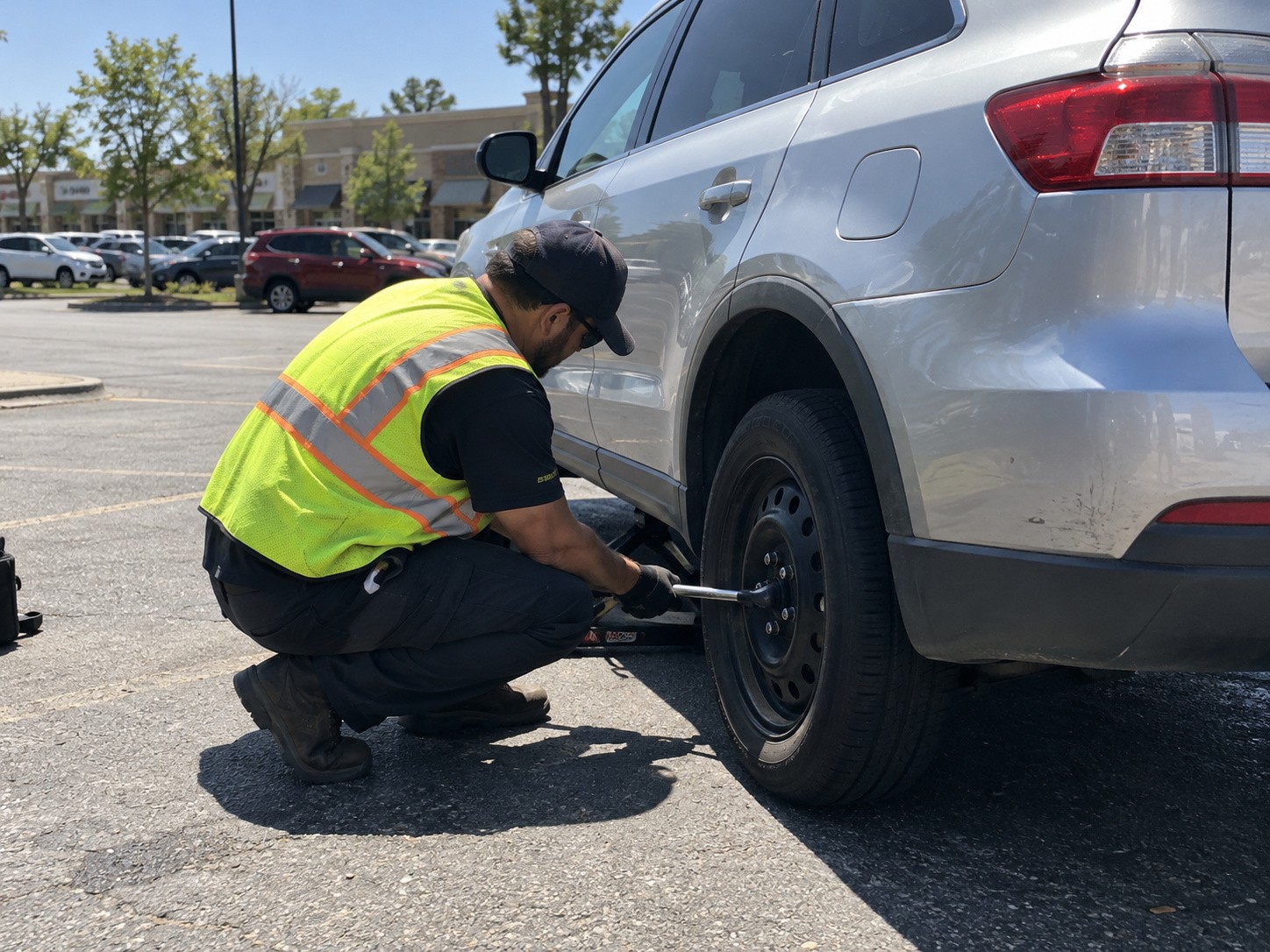
    If you are in a situation where you have managed to get your vehicle completely off the freeway and into a genuinely safe location, such as a wide emergency stopping area or well away from the road, and if the conditions are safe, you may be able to change the tire yourself. However, if there is any doubt about the safety of your surroundings, calling a professional roadside assistance service to change the tire for you is the much safer option.

    A professional tire change service means you stay safely inside your vehicle while a trained and experienced technician handles the tire change in a safe and efficient manner. The relatively small cost of a professional tire change service is well worth it compared to the risk of attempting to do it yourself on a busy freeway.

    What to Do After the Flat Tire Has Been Resolved

    Whether your flat tire was resolved by a professional tire change service, by changing the tire yourself in a safe location, or by having your vehicle towed to a tire shop, there are a few important steps to take after the immediate situation has been resolved:

    Visit a Tire Shop as Soon as Possible, If your flat tire was resolved by installing a spare tire, particularly a compact temporary spare, also known as a donut, visit a tire shop as soon as possible to have a proper replacement tire fitted. Compact spare tires are only designed for short-distance, low-speed driving and should not be used for extended periods or at freeway speeds.

    Have the Damaged Tire Inspected: Even if the damaged tire appears to be repairable, have it professionally inspected by a tire specialist before making a decision. Some types of tire damage, particularly sidewall damage and blowouts, cannot be safely repaired and require the tire to be replaced entirely.

    Check Your Remaining Tires: A flat tire is often a sign that your tires may be due for inspection or replacement. While you are at the tire shop, have your remaining tires inspected for wear, damage, and proper inflation. Catching potential tire problems early can help prevent another flat tire down the road.

    Restock Your Spare Tire: If you used your spare tire to resolve the flat, make sure to replace it as soon as possible so you are prepared if another flat tire occurs in the future. A vehicle without a spare tire is significantly more vulnerable in a flat tire situation.

    How to Reduce the Risk of a Flat Tire on the Freeway

    While flat tires can never be completely eliminated, there are several proactive steps you can take to significantly reduce the risk of experiencing one, particularly at the worst possible time on a busy Los Angeles freeway:

    Check Your Tire Pressure Regularly: Properly inflated tires are significantly less vulnerable to damage and failure than underinflated or overinflated ones. Check your tire pressure at least once a month and before any long drive, and keep your tires inflated to the pressure recommended in your vehicle’s owner’s manual or on the sticker inside the driver’s door frame.

    Inspect Your Tires for Wear and Damage: Regularly inspect your tires for signs of excessive wear, cuts, bulges, cracks, or embedded objects such as nails or screws. Catching these issues early allows you to address them before they lead to a flat or blowout on the road.

    Replace Worn Tires Promptly: Tires that are worn down to or near the minimum tread depth are significantly more vulnerable to punctures and blowouts. Don’t wait until your tires are completely bald to replace them. If the tread depth is getting low, start planning for new tires before they become a safety hazard.

    Avoid Road Hazards When Possible: While it’s not always possible to avoid every hazard on the road, being alert and aware of your surroundings can help you spot and avoid debris, potholes, and other road hazards before they cause damage to your tires.

    Carry a Roadside Emergency Kit: Having a basic roadside emergency kit in your vehicle (including a properly inflated spare tire, a jack, a lug wrench, reflective triangles or road flares, and a flashlight) means you are better prepared to deal with a flat tire situation safely and efficiently if one does occur.

    Getting Off the 170, the 101 and the 134 Safely

    The freeways around North Hollywood have short merges and narrow shoulders in places, so the next exit is often a safer place to stop than the shoulder:

    • On the 170, the boulevard exits lead to wide surface streets with room to pull over
    • On the 101 near the Cahuenga Pass, the shoulders are tight. If you can keep rolling slowly, use the next exit
    • On the 134 past Toluca Lake and Burbank, aim for the right shoulder, never the center median

    Once you’re stopped, tell us the freeway, your direction and the last exit. Wait inside the car with your seat belt on, or behind the guardrail if it’s safe to get out.

    Got a Flat Tire on a Los Angeles Freeway? Call Rosario Swift Towing Services.

    If you have a flat tire on a freeway or anywhere else in North Hollywood or the surrounding Greater Los Angeles area, Rosario Swift Towing Services is here to help. Our experienced team provides fast, professional flat tire change service and towing throughout the Greater LA area, getting to you quickly and resolving your situation safely and efficiently so you can get back on the road with minimal disruption to your day. Give us a call at (747) 877-8577 or fill out our online form to request assistance. Stay safe out there. We’re here when you need us most.

    Frequently Asked Questions

    Can I drive on a flat tire to the next exit?

    Slowly, and only if it’s the safer choice. Driving on a flat can ruin the wheel, but your safety matters more than the rim.

    Do you change tires on the freeway shoulder?

    When the shoulder is wide enough to work safely, yes. If it isn’t, we tow the car to a safe spot first.

    What if my spare tire is flat or missing?

    Then we tow your car to a tire shop or your mechanic.

    How much does a tow cost?

    It depends on the vehicle, the distance and where it’s going. Call (747) 877-8577 and we’ll give you the price on the phone before we send a truck.

    Related Services

    Flat Tire on a Valley Freeway?

    (747) 877-8577

    Available day and night. Or send a quote request and we’ll call you back.

  • What Is Winch Out Service and When Do You Need It?

    What Is Winch Out Service and When Do You Need It?

    Most drivers are familiar with the concept of towing, having a broken down or damaged vehicle transported from one location to another by a tow truck. But what happens when your vehicle isn’t just broken down, but is actually stuck in a position where a standard tow truck simply cannot reach it or hook up to it in the conventional way? What do you do when your car has slid into a ditch, gotten stuck in mud, gone off the edge of a road, or ended up in any other situation where it simply cannot be moved by ordinary means?

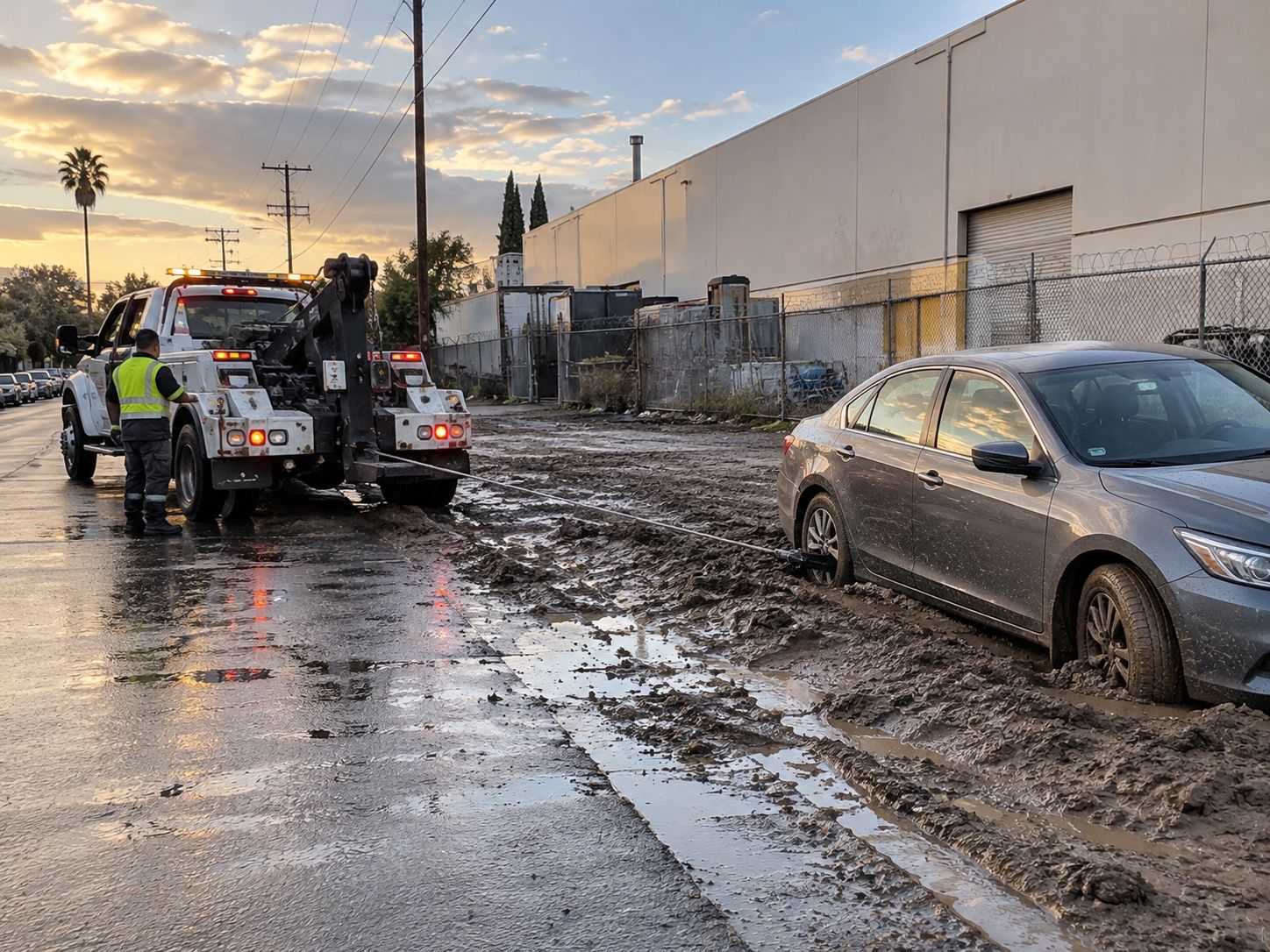
    Short answer: A winch-out pulls a vehicle that’s stuck, not broken, back onto solid ground: out of mud, a ditch, a curb or a steep driveway. A tow truck uses a cable and winch to pull it free, and you usually drive away. If your engine runs but the wheels just spin, call (747) 877-8577 for a winch-out.

    That’s exactly the situation that winch out service is designed to handle. Winch out service is one of the most specialized and least understood roadside assistance services available, and yet it is an incredibly valuable resource for drivers who find themselves in situations that go beyond a standard breakdown. Whether you’ve taken a wrong turn onto an unpaved road, been caught out by slippery conditions on a rainy Los Angeles night, or simply misjudged a turn and ended up somewhere your vehicle was never meant to go, a professional winch out service can be the difference between a minor inconvenience and a major ordeal.

    In this guide, we explain exactly what winch out service is, how it works, the most common situations where it is needed, and what you should do if you ever find yourself in a position where you need one.

    What Exactly Is a Winch Out?

    A winch out is a vehicle recovery technique that uses a motorized winch (a powerful mechanical device consisting of a motor, a drum, and a strong steel cable or synthetic rope) to pull a stuck or trapped vehicle out of a difficult position and back onto solid, accessible ground. The winch is typically mounted on a heavy-duty tow truck or dedicated recovery vehicle and is capable of generating an enormous amount of pulling force: far more than what could ever be achieved by pushing, pulling by hand, or using another vehicle to tow the stuck car out.

    The key distinction between a winch out and a standard tow is the purpose of each service. A standard tow is used to transport a vehicle from one location to another, for example, from the side of the road to a repair shop. A winch out, on the other hand, is specifically used to extract a vehicle from a situation where it is stuck, trapped, or otherwise unable to be moved by conventional means. In many cases, once the winch out has been successfully completed and the vehicle is back on solid ground, it can then be driven away normally, though in some situations a tow may also be needed if the vehicle has sustained damage during the incident.

    Winch outs require a skilled and experienced operator who understands how to assess the situation, determine the optimal angle and attachment point for the winch cable, and operate the winch in a way that extracts the vehicle safely and effectively without causing additional damage. It is not as simple as attaching a cable and pulling: the wrong approach can make the situation significantly worse, potentially causing damage to the vehicle’s frame, undercarriage, or suspension components.

    How Does a Winch Out Work?

    Understanding the basic mechanics of a winch out can help you appreciate why it requires professional expertise and specialized equipment. Here is a simplified overview of how the winch out process works:

    Assessing the Situation: Before any recovery work begins, an experienced operator carefully assesses the full situation. This includes evaluating the position and angle of the stuck vehicle, the nature of the terrain, the weight of the vehicle, the safest direction of extraction, and any potential hazards in the surrounding environment. This assessment is a critical step that directly influences the safety and effectiveness of the recovery.

    Positioning the Recovery Vehicle: The tow truck or recovery vehicle is positioned in the optimal location to perform the winch out. This is not always directly in front of or behind the stuck vehicle, depending on the terrain and the angle of extraction, the recovery vehicle may need to be positioned at an angle or even at a significant distance from the stuck vehicle to achieve the safest and most effective pull.

    Attaching the Winch Cable: The winch cable or synthetic rope is extended from the winch drum and attached securely to the stuck vehicle at the appropriate recovery points. These are specific structural points on the vehicle (typically tow hooks, recovery points built into the frame, or other robust attachment points) that are designed to withstand the significant forces involved in a winch out. Attaching the cable to the wrong point on the vehicle can cause serious structural damage.

    Controlled Extraction: With everything in place, the operator carefully engages the winch, applying steady and controlled tension to the cable. The winch pulls the stuck vehicle in the direction of extraction, slowly and steadily freeing it from whatever terrain or obstacle it was stuck in. The operator monitors the process closely throughout, adjusting the speed and direction of the pull as needed to ensure the extraction proceeds safely.

    Recovery and Assessment: Once the vehicle has been successfully extracted and is back on solid, accessible ground, the operator conducts a quick inspection to assess the vehicle’s condition. They will advise you on whether the vehicle is safe to drive or whether additional assistance, such as a tow to a repair shop, is needed.

    Common Situations Where You Need a Winch Out

    Winch out service is needed in a surprisingly wide variety of situations. Here are some of the most common scenarios where drivers find themselves in need of a professional winch out:

    Stuck in Mud

    Mud is one of the most common causes of a vehicle getting stuck, particularly after heavy rainfall. When a vehicle drives into soft, wet mud, the wheels can quickly lose traction and begin to spin without making any forward progress. The more the driver attempts to accelerate out of the mud, the deeper the wheels can dig in, making the situation progressively worse. A winch out can extract the vehicle from the mud without the need for the wheels to regain traction, pulling it back to solid ground regardless of how deeply embedded it has become.

    Stuck in Sand

    Sand presents similar challenges to mud in terms of traction. Vehicles that venture onto sandy terrain, whether intentionally for off-road driving or accidentally by taking a wrong turn, can quickly find their wheels spinning uselessly as the sand shifts beneath them. A winch out is one of the most effective ways to recover a vehicle that is stuck in sand, particularly when the wheels have dug themselves deeply into the surface.

    Slid into a Ditch

    Ditches alongside roads are a frequent hazard, particularly on wet or slippery road surfaces. A momentary loss of control, a misjudged turn, or an unexpected obstacle can send a vehicle off the road and into a roadside ditch. Depending on the depth and angle of the ditch, extracting a vehicle from this situation without the right equipment can be extremely difficult or even impossible. A professional winch out is typically the safest and most effective solution.

    Gone Off the Road

    Sometimes a vehicle ends up off the road in terrain that a standard tow truck simply cannot access: such as down an embankment, in a gully, or in dense vegetation alongside the road. In these situations, a winch out allows the recovery vehicle to remain on the road or in an accessible location while the winch cable is extended to reach the stuck vehicle and pull it back to accessible ground.

    Stuck on an Incline or Embankment

    Vehicles that become stuck on a slope, hill, or embankment, particularly on loose or slippery surfaces, can present a significant recovery challenge. The combination of the vehicle’s weight, the incline, and the lack of traction can make it impossible for the vehicle to drive itself back to level ground. A winch out provides the additional pulling force needed to overcome these challenges and bring the vehicle safely back to flat ground.

    Stuck in Flood Water

    In extreme weather situations, vehicles can become stranded in flood water, either by driving into a flooded section of road or by being caught by rising water. If your vehicle has become stuck in or near flood water, it is absolutely critical that you do not attempt to drive it out yourself. Flood water can hide deep potholes, washed out road surfaces, and other hazards that can make the situation significantly more dangerous. Call a professional recovery service immediately and wait in a safe location away from the water.

    Vehicle Wedged in a Tight Space

    In urban environments like the Greater Los Angeles area, vehicles can sometimes become wedged in tight spaces: such as in a narrow alleyway, between structures, or in a parking situation that has gone wrong. A winch out can sometimes be used to carefully extract a vehicle from these situations where conventional towing is not possible.

    Can You Winch Your Own Vehicle Out?

    This is a question many drivers ask, particularly those who enjoy off-road driving and may have seen consumer-grade winch kits available for purchase. While it is technically possible to winch a vehicle out yourself if you have the right equipment and knowledge, there are several important reasons why calling a professional is almost always the better option.

    First, professional winch out equipment is significantly more powerful and reliable than consumer-grade alternatives. A professional tow truck winch is designed to handle the full weight of a vehicle under real-world recovery conditions, whereas many consumer winches are rated for much lower loads and may not perform adequately in a serious recovery situation.

    Second, and perhaps more importantly, performing a winch out safely requires knowledge and experience that most drivers simply don’t have. Choosing the wrong attachment point, applying tension at the wrong angle, or operating the winch too aggressively can cause serious damage to the vehicle’s frame, undercarriage, or body, turning what could have been a minor incident into a much more costly one.

    Third, in many stuck situations (particularly those involving ditches, embankments, or off-road terrain) the driver is simply not in a position to safely perform their own recovery. The terrain may be unstable, the vehicle may be at a dangerous angle, or there may be other hazards present that make a DIY recovery attempt risky.

    For all of these reasons, calling a professional winch out service is almost always the safest, most effective, and most cost-efficient approach.

    Where Drivers Get Stuck Around the Valley

    Most of our winch-out calls come from the same kinds of places:

    • Dirt lots and unpaved shoulders after winter rain, when the ground turns to mud
    • Hillside driveways and canyon roads in the hills above Studio City and Sherman Oaks, where a wheel slips off the edge
    • Construction sites and work yards with soft fill dirt
    • Curbs and parking blocks, where a low car gets hung up
    • Grass and gravel lots used for event parking

    In each case, tell us whether the engine runs and whether anyone is still in the vehicle. Stop spinning the wheels: it only digs the tires in deeper.

    Winch Out Service in North Hollywood and the Greater LA Area

    While Los Angeles is primarily an urban environment, the Greater LA area is surrounded by a diverse range of terrain, from hills and canyons to riverbeds and unpaved roads, that can present real recovery challenges for drivers who find themselves off the beaten path. Even within the city itself, heavy rainfall can cause flooding and slippery conditions that lead to vehicles ending up in ditches or off the road.

    At Rosario Swift Towing Services, our winch out service covers North Hollywood and the surrounding Greater Los Angeles area. Our team is experienced in handling a wide range of winch out and vehicle recovery situations, and we arrive equipped with the professional-grade winching equipment needed to get your vehicle safely extracted and back on the road as quickly as possible. Give us a call at (747) 877-8577 or fill out our online form to request assistance. We’re here when you need us most.

    Frequently Asked Questions

    Is a winch-out cheaper than a tow?

    Often, because your vehicle is pulled free and driven away instead of hauled to a shop. Call (747) 877-8577 and we’ll give you the price on the phone.

    Can you winch out a van or a box truck?

    Yes. We winch out cars, SUVs, pickups, vans and box trucks.

    What if my car is stuck and won’t start?

    Then we winch it free first, then jump-start it or tow it to your mechanic.

    Should I keep trying to drive out?

    No. Spinning the wheels digs the tires deeper and can strain the transmission. Stop and call.

    Related Services

    Stuck in North Hollywood or Nearby?

    (747) 877-8577

    Available day and night. Or send a quote request and we’ll call you back.

  • Common Reasons Your Car Won’t Start and What to Do About It

    Common Reasons Your Car Won’t Start and What to Do About It

    There are few things more frustrating than getting into your car, turning the key or pressing the start button, and having absolutely nothing happen: or worse, hearing a series of clicks, a weak crank, or an unusual sound that tells you something is clearly wrong. A car that won’t start can throw your entire day into chaos, whether it happens in your driveway first thing in the morning, in a parking lot after a long day of work, or in an unfamiliar part of the Greater Los Angeles area far from home.

    Short answer: Most cars that won’t start have a dead or weak battery, a failing alternator or starter, an empty tank, or an ignition or fuel problem. Fast clicking usually points to the battery. Try a jump start first. If the car still won’t start, it needs a tow to a mechanic. In North Hollywood, call (747) 877-8577.

    The tricky part about a car that won’t start is that there are many different reasons it can happen, and without the right knowledge it can be difficult to figure out what the problem actually is. Is it the battery? The alternator? The starter motor? A fuel issue? Something else entirely? Each of these problems has its own set of symptoms and its own solution, and knowing how to identify them can make a significant difference in how quickly and efficiently you can get the situation resolved.

    The tricky part about a car that won’t start is that there are many different reasons it can happen, and without the right knowledge it can be difficult to figure out what the problem actually is. Is it the battery? The alternator? The starter motor? A fuel issue? Something else entirely? Each of these problems has its own set of symptoms and its own solution, and knowing how to identify them can make a significant difference in how quickly and efficiently you can get the situation resolved.

    In this guide, we walk you through the most common reasons a car won’t start, how to identify which problem you might be dealing with, what you can do about it, and when it’s time to call a professional for help.

    1. Dead or Weak Battery

    How to identify it:

    A dead or weak battery typically produces one of the following symptoms when you try to start your car. You may hear a rapid clicking sound when you turn the key. This is the starter motor trying to engage but not getting enough power from the battery to do so. You may hear a slow, labored cranking sound as the engine struggles to turn over. Or you may get no response at all (no sound, no lights, nothing) when you turn the key or press the start button.

    You may also notice that your dashboard lights are dim or not illuminating at all, that your headlights are very weak, or that electrical components like your radio and power windows are not functioning properly. These are all signs that your battery does not have sufficient charge.

    What to do about it:

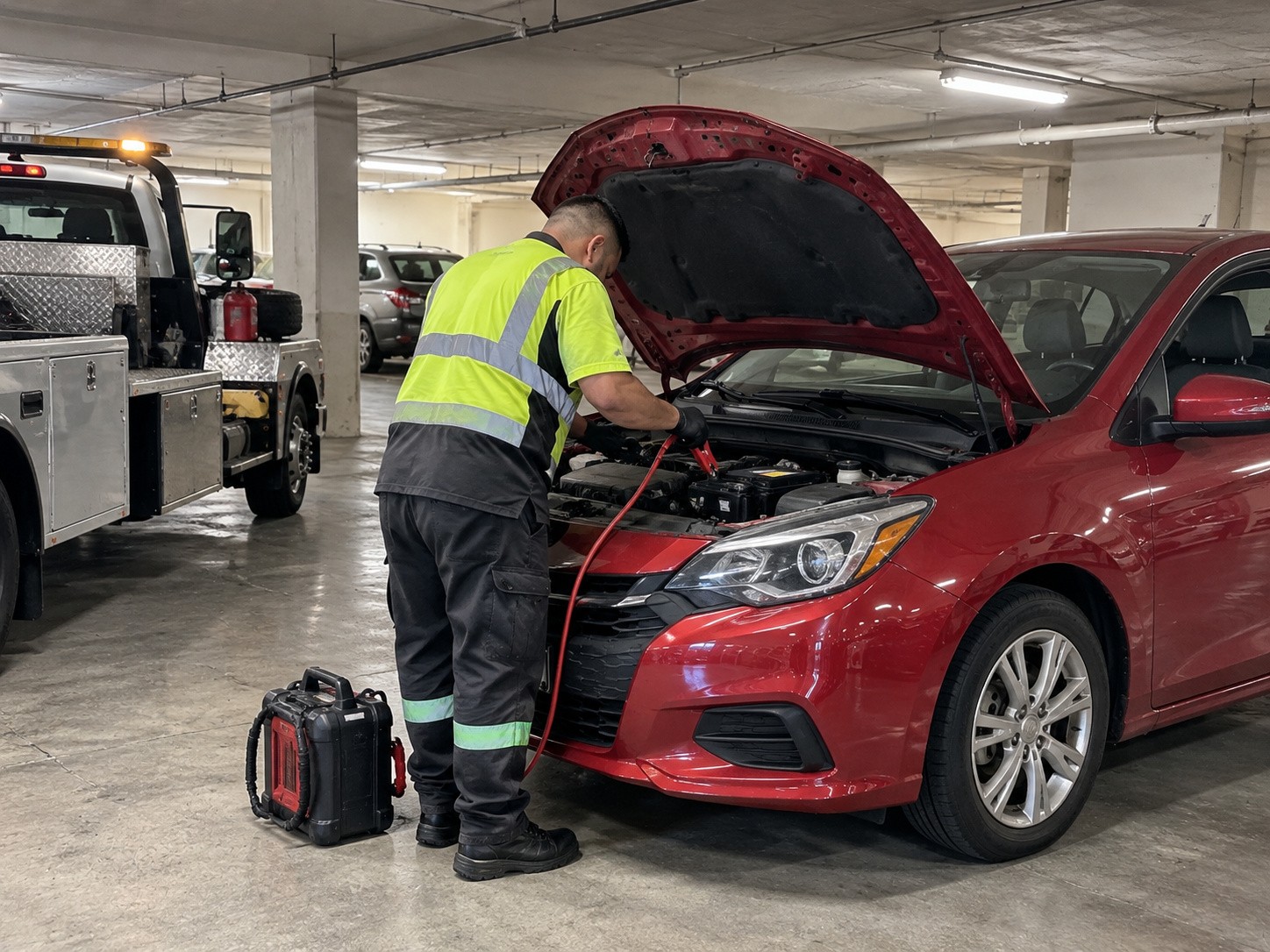
    If you suspect a dead battery, the first thing to try is a jump start. If you have jumper cables and another vehicle with a charged battery available, you can attempt to jump start your car yourself. If not, calling a roadside assistance service for a professional jump start is the quickest and easiest solution.

    Keep in mind that if your battery keeps dying after being jump started, it is likely that the battery itself is failing and needs to be replaced. Most car batteries have a lifespan of three to five years, so if yours is approaching or past that age it may simply be time for a new one.

    2. Faulty Alternator

    While a dead battery is the most common culprit when a car won’t start, a faulty alternator is another frequent cause that is often mistaken for a battery problem. The alternator is the component responsible for recharging your battery while the engine is running. If the alternator is not working properly, the battery will gradually drain even while you’re driving and will eventually reach a point where there is not enough charge left to start the engine.

    How to identify it:

    A faulty alternator can be tricky to identify because its symptoms, particularly a dead or dying battery, closely resemble those of a straightforward battery problem. However, there are a few clues that can help you distinguish between the two. If your battery dies repeatedly even after being jump started or replaced with a new battery, a faulty alternator is a likely suspect. You may also notice warning lights on your dashboard, particularly the battery warning light, illuminating while you are driving, which can indicate that the alternator is not adequately charging the battery.

    Other signs of a faulty alternator include dimming headlights while driving, electrical components behaving erratically, or a burning smell coming from under the hood.

    What to do about it:

    Unfortunately, a faulty alternator is not something that can be fixed on the roadside. If you suspect your alternator is the problem, the best course of action is to have your vehicle towed to a reputable auto repair shop where a mechanic can properly diagnose and replace the alternator. Continuing to drive with a failing alternator will only drain your battery further and risk leaving you stranded again.

    3. Faulty Starter Motor

    The starter motor is the component that physically cranks the engine when you turn the key or press the start button. When the starter motor fails, it can prevent the engine from turning over at all, leaving you with a car that simply won’t start no matter how many times you try.

    How to identify it:

    A faulty starter motor has a distinct set of symptoms that set it apart from a battery or alternator problem. The most telltale sign is a single loud click, rather than the rapid clicking associated with a dead battery, when you turn the key. You may also notice that nothing happens at all when you turn the key, even though your dashboard lights, headlights, and other electrical components are working perfectly fine. This is a key distinction. If your electronics are working normally but the engine simply won’t crank, the starter motor is a strong suspect.

    In some cases, a failing starter motor may work intermittently, starting the car successfully some of the time but failing at other times. This on-and-off behavior is a classic symptom of a starter motor that is on its way out.

    What to do about it:

    A faulty starter motor requires professional repair and cannot be fixed on the roadside. If you suspect your starter motor is the problem, the safest and most practical solution is to call a towing company to have your vehicle transported to an auto repair shop for diagnosis and repair. Attempting to force a car to start with a faulty starter motor can sometimes cause further damage to the starting system.

    4. Empty Fuel Tank

    It might seem like an obvious one, but running out of fuel is a more common cause of a no-start situation than most drivers would like to admit. A faulty or inaccurate fuel gauge can make it appear that there is more fuel in the tank than there actually is, leading drivers to run out of gas without warning. In other cases, drivers simply misjudge how far they can go on a low tank and end up running dry before reaching a gas station.

    How to identify it:

    If your fuel gauge is reading at or near empty, or if you know you have been driving on a very low tank, an empty fuel tank is the most likely explanation for your car not starting. The engine may crank normally when you try to start it but fail to fire up, which is a classic sign that there is fuel in the lines being drawn through but the tank itself is empty or nearly empty.

    What to do about it:

    The solution to an empty fuel tank is straightforward. You need fuel. If you are close enough to walk safely to a gas station and can bring fuel back in an approved container, that is one option. Alternatively, calling a roadside fuel delivery service is a much more convenient and safer solution, particularly if you are stranded in a location that makes walking to a gas station impractical or unsafe. At Rosario Swift Towing Services, we offer fuel delivery service throughout North Hollywood and the surrounding Greater Los Angeles area to get you back on the road quickly and safely.

    5. Faulty Ignition Switch

    The ignition switch is the electrical component that activates the various systems your vehicle needs to start when you turn the key. When the ignition switch fails, it can prevent power from reaching the starter motor and other essential starting components, resulting in a car that won’t start.

    How to identify it:

    A faulty ignition switch can be particularly tricky to diagnose because its symptoms can overlap with those of a dead battery or faulty starter motor. However, there are a few specific signs that point toward the ignition switch as the culprit. If your dashboard lights flicker or fail to illuminate when you turn the key to the on position, but your battery and electrical system otherwise seem fine, the ignition switch may be at fault. You may also notice that the key feels loose, stiff, or unusual in the ignition, or that the car starts intermittently depending on the exact position of the key.

    What to do about it:

    A faulty ignition switch requires diagnosis and repair by a qualified mechanic. If you suspect this is the problem, call a towing company to have your vehicle transported to a repair shop. Do not attempt to force the key or manipulate the ignition switch, as this can potentially cause further damage or, in some cases, break the key off inside the ignition.

    6. Fuel System Problems

    Beyond simply running out of fuel, there are a number of fuel system issues that can prevent a car from starting. A clogged fuel filter, a failing fuel pump, or a problem with the fuel injectors can all result in the engine not receiving the fuel it needs to start and run properly.

    How to identify it:

    Fuel system problems can be difficult to diagnose without professional equipment and expertise. However, some common signs include an engine that cranks normally but fails to start, a sputtering or rough-running engine that eventually stalls and refuses to restart, or a noticeable loss of power and performance in the period leading up to the no-start situation. You may also hear a high-pitched whining sound from the fuel tank area, which can indicate a failing fuel pump.

    What to do about it:

    Fuel system problems require diagnosis and repair by a qualified mechanic with the appropriate diagnostic equipment. If you suspect a fuel system issue, call a towing company to have your vehicle transported to a repair shop. Attempting to start the car repeatedly with a fuel system problem can sometimes make the situation worse and potentially cause additional damage.

    7. Flooded Engine

    An engine flood occurs when too much fuel enters the engine’s cylinders, making it impossible for the engine to start. This is more common in older carbureted engines but can also happen in modern fuel-injected vehicles under certain circumstances. Most often when a driver repeatedly attempts to start a car that is having difficulty starting, pumping excess fuel into the engine in the process.

    How to identify it:

    A flooded engine typically produces a strong smell of gasoline when you try to start the car. The engine may crank normally but fail to fire, and you may notice that the more you try to start it, the worse the situation gets. If you have been repeatedly attempting to start a car that is struggling to start, there is a good chance the engine may be flooded.

    What to do about it:

    If you suspect a flooded engine, the first thing to do is stop trying to start the car, repeated attempts will only make the flooding worse. In many cases, waiting ten to fifteen minutes before trying again can allow some of the excess fuel to evaporate, giving the engine a better chance of starting. When you do try again, press the accelerator pedal fully to the floor while cranking the engine. This opens the throttle fully and allows more air into the engine, which can help clear the excess fuel. If the engine still refuses to start after these steps, calling a towing company and having it transported to a mechanic for proper diagnosis is the best course of action.

    8. Seized Engine

    A seized engine is one of the most serious and costly no-start situations a driver can face. Engine seizure occurs when internal engine components, typically the pistons, become stuck due to a lack of lubrication, extreme overheating, or physical damage. A seized engine is almost always the result of neglected maintenance, particularly failing to maintain adequate oil levels.

    How to identify it:

    A seized engine produces a very distinct symptom: when you try to start the car, the starter motor will engage but the engine will not turn over at all, producing a grinding or clunking sound rather than a normal cranking sound. In some cases, the starter motor fuse may blow as a result of the excessive resistance it encounters trying to turn a seized engine. If you have recently driven your vehicle with a low oil warning light illuminated, or if your engine was overheating before it stopped starting, a seized engine is a very real possibility.

    What to do about it:

    A seized engine is a serious mechanical failure that requires immediate professional attention. Do not attempt to force the engine to start, as this can cause further and potentially irreparable damage. Call a towing company right away to have your vehicle transported to a qualified mechanic for assessment. Depending on the extent of the damage, repair may range from a costly engine rebuild to a full engine replacement.

    When Should You Call a Towing Company?

    Not every no-start situation requires a tow: sometimes a jump start, a fuel delivery, or a simple fix is all that’s needed to get back on the road. However, there are situations where calling a towing company is clearly the right move:

    Call a towing company if your vehicle has a suspected alternator, starter motor, ignition switch, or fuel system problem that cannot be resolved on the roadside. These issues require professional diagnosis and repair in a workshop environment.

    Call a towing company if your vehicle has a seized engine or any other serious mechanical failure. Attempting to drive or force-start a vehicle with a serious mechanical problem can cause further and far more costly damage.

    Call a towing company if your vehicle is in a location that makes it unsafe to wait for other types of roadside assistance, such as on a busy freeway or in an isolated area.

    Call a towing company if you have tried the basic troubleshooting steps appropriate to your situation and the vehicle still refuses to start. At that point, getting a professional involved is the fastest and safest way to resolve the situation.

    At Rosario Swift Towing Services, we provide fast, reliable towing and roadside assistance, including jump start service and fuel delivery, throughout North Hollywood and the surrounding Greater Los Angeles area. Whatever the reason your car won’t start, we’re here to help you get the situation resolved as quickly and smoothly as possible.

    Car Won’t Start in North Hollywood or the Greater LA Area? Call Us Now.

    Dead Batteries in Valley Heat

    Summer days in the San Fernando Valley often go past 100 degrees, and heat is hard on car batteries. A battery can seem fine in spring and quit in August, especially if the car sits outside or in a hot parking structure. To lower the odds:

    • Have the battery tested if it’s more than three years old
    • Park in the shade or a garage when you can
    • Keep the battery terminals clean and tight
    • Don’t run the AC, radio and phone chargers with the engine off

    If your car only clicks in a parking garage or on a street in North Hollywood, a jump start often gets you going right where you are.

    Car Won’t Start in North Hollywood or the Greater LA Area? Call Us Now

    Don’t let a no-start situation ruin your day. Whether you need a jump start, a fuel delivery, or a tow to the nearest repair shop, Rosario Swift Towing Services is ready to help. We serve drivers throughout North Hollywood and the surrounding Greater Los Angeles area, and we’re committed to getting to you quickly and resolving your situation professionally and efficiently. Give us a call at (747) 877-8577 or fill out our online form to request assistance. We’re here when you need us most.

    Frequently Asked Questions

    What does it mean if my car clicks but won’t start?

    Fast clicking usually means the battery is too weak to turn the starter. A jump start often fixes it.

    My car started after a jump. Do I still need a mechanic?

    Have the battery and alternator tested soon. If the alternator isn’t charging, the car can die again while you drive.

    Can you jump-start a car in a parking garage?

    Yes, in most garages. When you call, tell us the level, the space number and the height limit on the entrance sign.

    What if the jump start doesn’t work?

    Then the problem is likely the starter, alternator, fuel or ignition. We can tow your car to your mechanic.

    Related Services

    Car Won’t Start in North Hollywood?

    (747) 877-8577

    Available day and night. Or send a quote request and we’ll call you back.
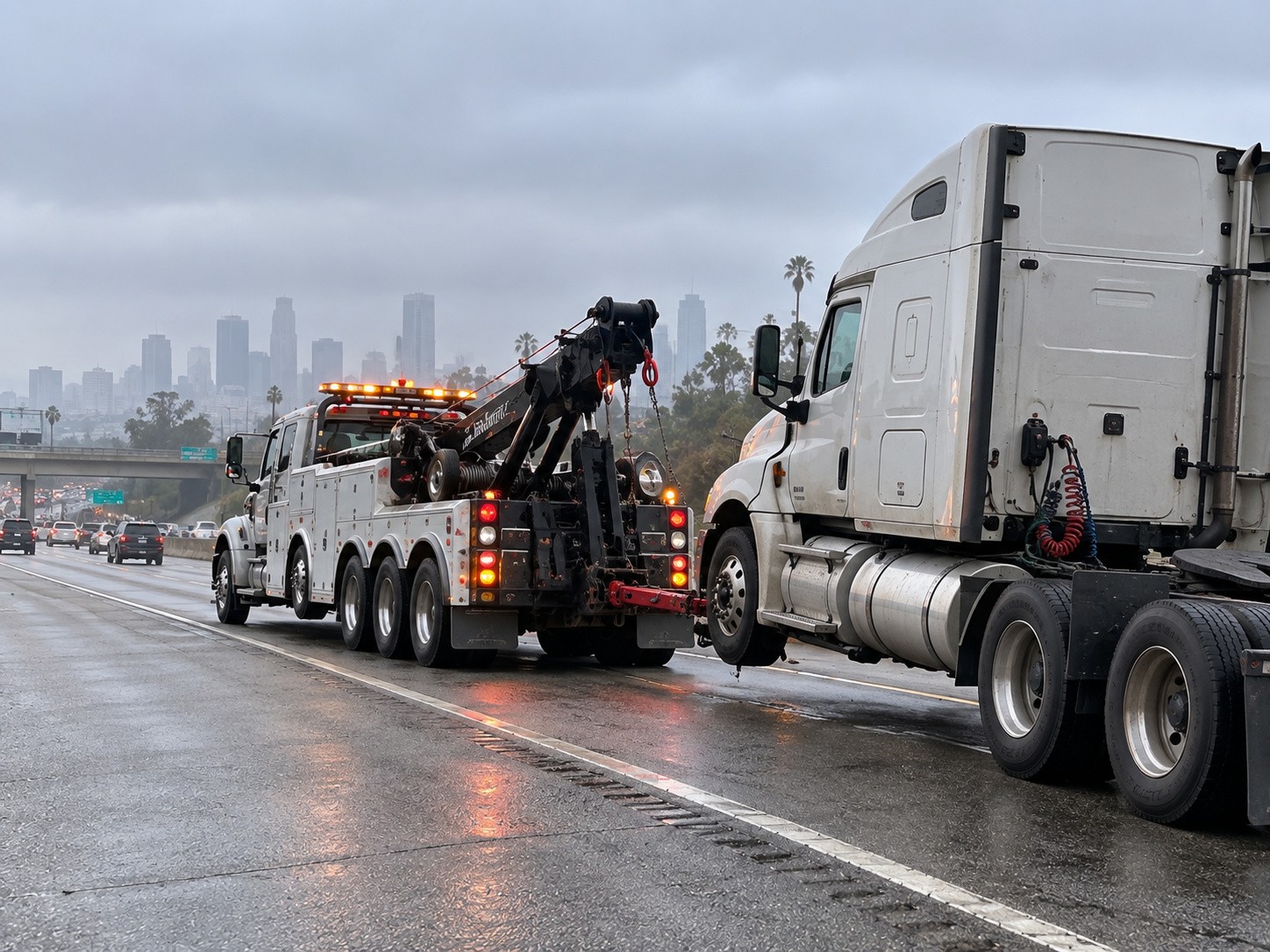

  • Light-Duty, Medium-Duty, and Heavy-Duty Towing: What’s the Difference and Which One Do You Need?

    Light-Duty, Medium-Duty, and Heavy-Duty Towing: What’s the Difference and Which One Do You Need?

    If you’ve ever called a towing company or searched for towing services online, you’ve probably come across the terms light-duty, medium-duty, and heavy-duty towing. But what do these terms actually mean? And more importantly, how do you know which type of towing service is the right one for your vehicle and your situation?

    Short answer: Light-duty towing is for cars, SUVs, small pickups and motorcycles. Medium-duty towing is for larger vans, box trucks, work trucks and small buses. Heavy-duty towing is for semi-trucks, large RVs, buses and big equipment. Not sure which you need? Tell us the vehicle when you call (747) 877-8577 and we’ll send the right truck.

    Understanding the difference between these three categories of towing is more important than most drivers realize. Choosing the wrong type of towing service for your vehicle can result in improper handling, inadequate equipment, and in the worst cases, serious damage to your vehicle during the towing process. On the other hand, knowing exactly which type of towing you need allows you to make a quick and confident decision when you’re in the middle of a stressful roadside situation, which is exactly when clear thinking matters most.

    In this guide, we break down the key differences between light-duty, medium-duty, and heavy-duty towing, explain which types of vehicles fall into each category, and help you figure out which service is the right fit for your situation.

    What Determines the Type of Towing Service You Need?

    Before diving into the specifics of each towing category, it’s helpful to understand what factors determine which type of towing service is appropriate for a given vehicle or situation. The two most important factors are the size and weight of the vehicle being towed.

    Different tow trucks are built and rated to handle different maximum vehicle weights. Using a tow truck that is not rated for the weight of the vehicle being towed is not only ineffective. It is potentially dangerous, both for the vehicle being towed and for other drivers on the road. This is why towing companies categorize their services into light, medium, and heavy-duty, and why it’s important to call a company that has the right equipment for your specific vehicle.

    In addition to size and weight, the type of towing equipment used (whether a flatbed, a wheel-lift, or a heavy-duty rotator) also plays a role in determining the appropriate towing service for a given vehicle and situation. A good towing company will assess your vehicle and situation and recommend the right type of service and equipment accordingly.

    Light-Duty Towing: For Everyday Passenger Vehicles

    Light-duty towing is the most common type of towing service and covers the vast majority of everyday passenger vehicles that most drivers use on a daily basis. If you drive a standard car, SUV, crossover, pickup truck, motorcycle, or minivan, light-duty towing is almost certainly the service you need when something goes wrong on the road.

    Light-duty tow trucks are designed to handle vehicles up to a certain weight limit, and they come in two main configurations, flatbed and wheel-lift. A flatbed tow truck loads the entire vehicle onto a flat platform, lifting all four wheels completely off the ground. A wheel-lift tow truck uses a metal yoke to lift either the front or rear wheels of the vehicle off the ground while the other two wheels remain on the road.

    Common vehicles that require light-duty towing include:

    • Sedans and compact cars
    • SUVs and crossovers
    • Minivans and passenger vans
    • Light pickup trucks
    • Motorcycles and scooters
    • Hybrid and electric vehicles
    • Classic and luxury cars

    Common situations where light-duty towing is needed include:

    • Vehicle breakdown or engine failure
    • Accident recovery for smaller vehicles
    • Flat tire with no spare available
    • Vehicle won’t start and cannot be jump started
    • Overheating that makes further driving unsafe
    • Transmission or mechanical failure

    Light-duty towing is the go-to solution for the vast majority of everyday roadside emergencies that drivers encounter. If you drive a standard passenger vehicle and find yourself in need of a tow, light-duty towing is almost certainly the right call.

    Medium-Duty Towing: For Larger Vehicles and Commercial Use

    Medium-duty towing covers vehicles that are larger and heavier than standard passenger cars but do not fall into the heavy-duty category. These vehicles require more powerful tow trucks and a higher level of expertise to handle safely, which is why medium-duty towing is a specialized service that not all towing companies are equipped to provide.

    Medium-duty tow trucks are built to handle the additional weight and size of these larger vehicles, and their operators are trained in the specific techniques required to safely load, secure, and transport them. For business owners and fleet operators whose livelihood depends on keeping their vehicles operational, having access to a reliable medium-duty towing service is particularly important.

    Common vehicles that require medium-duty towing include:

    • Cargo vans and large passenger vans
    • Box trucks and delivery trucks
    • Large pickup trucks
    • Large SUVs and full-size trucks
    • Small to medium-sized RVs and camper vans
    • Medium-sized commercial vehicles

    Common situations where medium-duty towing is needed include:

    • Commercial vehicle breakdown on the road
    • Engine or mechanical failure in a larger vehicle
    • Accident recovery for medium-sized vehicles
    • Overheating or transmission failure
    • Scheduled transport of a larger vehicle
    • Flat tire with no spare on a larger vehicle

    One of the most important things to keep in mind with medium-duty towing is that using a light-duty tow truck to tow a medium-duty vehicle is not only potentially ineffective but can also be dangerous. The tow truck may not have the capacity to safely handle the weight of the vehicle, putting both the vehicle and other road users at risk. Always make sure the towing company you call has the appropriate medium-duty equipment for your vehicle.

    Heavy-Duty Towing: For the Largest Vehicles on the Road

    Heavy-duty towing is the most specialized and technically demanding category of towing service. It covers the largest and heaviest vehicles on the road, vehicles that require purpose-built heavy-duty tow trucks and highly experienced operators to be moved safely and effectively.

    Heavy-duty towing is not a service that every towing company can provide. It requires significant investment in specialized equipment and a level of operator training and expertise that goes well beyond what is needed for light or medium-duty towing. If you need heavy-duty towing, it is essential that you call a company that is specifically equipped and experienced to handle it.

    Common vehicles that require heavy-duty towing include:

    • Semi-trucks and tractor-trailers
    • Large commercial trucks
    • Buses and charter coaches
    • Large Class A motorhomes
    • Construction and agricultural equipment
    • Oversized commercial fleet vehicles

    Common situations where heavy-duty towing is needed include:

    • Semi-truck or commercial vehicle breakdown
    • Engine or drivetrain failure in a large commercial vehicle
    • Accident recovery for heavy vehicles
    • Rollover recovery
    • Overheating or transmission failure in a large vehicle
    • Scheduled transport of heavy commercial equipment
    • Construction or agricultural equipment relocation

    The stakes are significantly higher with heavy-duty towing than with light or medium-duty towing. A heavy-duty vehicle that is towed incorrectly or with inadequate equipment can cause serious damage to the vehicle, the tow truck, the road surface, and can pose a significant safety risk to other drivers. This is why choosing a towing company with genuine heavy-duty towing experience and the right equipment is absolutely critical.

    How to Tell Which Type of Towing You Need

    Now that you understand the differences between the three categories, here are some simple guidelines to help you quickly determine which type of towing service is right for your situation:

    If you drive a standard car, SUV, crossover, minivan, motorcycle, or light pickup truck. You almost certainly need light-duty towing.

    If you drive a cargo van, box truck, large pickup truck, large SUV, or small to medium-sized RV. You likely need medium-duty towing.

    If you drive a semi-truck, tractor-trailer, bus, large Class A motorhome, or any other large commercial vehicle. You need heavy-duty towing.

    If you’re ever unsure which category your vehicle falls into, the easiest thing to do is call a towing company and describe your vehicle. An experienced dispatcher will be able to quickly determine the right type of towing service for your situation and dispatch the appropriate equipment.

    Why It Matters to Choose the Right Type of Towing

    Choosing the wrong type of towing service for your vehicle is not just an inconvenience. It can have real and costly consequences. Here’s why getting it right matters:

    Vehicle Safety: Using a tow truck that is not rated for the weight of your vehicle puts significant stress on the tow truck’s equipment and can result in serious damage to your vehicle during transport. In extreme cases, it can even cause the tow truck to lose control of the load, creating a dangerous situation for everyone on the road.

    Drivetrain Protection: Certain types of vehicles, particularly all-wheel drive and four-wheel drive vehicles, require specific towing methods to avoid damage to the drivetrain and transmission. Using the wrong towing method on these vehicles can result in expensive mechanical damage that far outweighs the cost of the tow itself.

    Operator Safety: Heavy vehicles require specialized equipment and expertise to tow safely. Attempting to tow a heavy-duty vehicle with inadequate equipment puts the tow truck operator at risk as well as other drivers on the road.

    Cost Efficiency: Getting the right type of towing the first time is almost always more cost-effective than dealing with the consequences of improper towing: whether that’s vehicle damage, a failed tow attempt, or having to call a second company with the right equipment after the first one couldn’t handle the job.

    Rosario Swift Towing Services: Equipped for All Three Categories

    At Rosario Swift Towing Services, we are proud to offer light-duty, medium-duty, and heavy-duty towing services throughout North Hollywood and the surrounding Greater Los Angeles area. Our full fleet of modern, well-maintained tow trucks and our team of experienced operators mean that we have the right equipment and the right expertise for virtually any towing situation you might face.

    Whether you drive a compact car, a cargo van, or a large commercial truck, you can call Rosario Swift Towing Services with confidence knowing that we have the tools and the experience to handle your vehicle safely and professionally. We assess every situation carefully and always use the most appropriate equipment and method for the job, because getting it right is what matters most.

    What to Tell Us So We Send the Right Truck

    The right truck the first time saves you time and money. When you call, have these ready:

    • Year, make and model of the vehicle
    • Loaded or empty, and roughly what it’s carrying
    • Where it is: a street, a lot, a loading dock or a freeway shoulder, and how much room there is around it
    • Whether the wheels roll and whether it can be put in neutral
    • Where it needs to go: a shop, a yard or a dealer

    On the narrow streets around the NoHo Arts District, or in a tight work yard in Sun Valley, the space around the vehicle matters as much as its size. A quick description helps us plan the pickup.

    Need Towing in North Hollywood or the Greater LA Area? Call Us Now.

    No matter what type of vehicle you drive or what type of towing situation you’re facing, Rosario Swift Towing Services is ready to help. We provide light-duty, medium-duty, and heavy-duty towing throughout North Hollywood and the surrounding Greater Los Angeles area. Give us a call at (747) 877-8577 or fill out our online form to request a quote or help. We’re here when you need us most.

    Frequently Asked Questions

    Is a pickup truck light duty or medium duty?

    Most standard pickups are light duty. Heavy-duty pickups with big loads or trailers can need a medium-duty truck. Tell us the model and what it’s carrying.

    Can you tow a box truck or a work van?

    Yes. We tow box trucks, vans and work trucks with our medium-duty equipment.

    Do you tow semi-trucks and RVs?

    Yes. We handle heavy-duty towing for semi-trucks, large RVs and buses.

    How much does a tow cost?

    It depends on the vehicle, the distance and where it’s going. Call (747) 877-8577 and we’ll give you the price on the phone before we send a truck.

    Related Services

    Need the Right Tow Truck in North Hollywood?

    (747) 877-8577

    Available day and night. Or send a quote request and we’ll call you back.
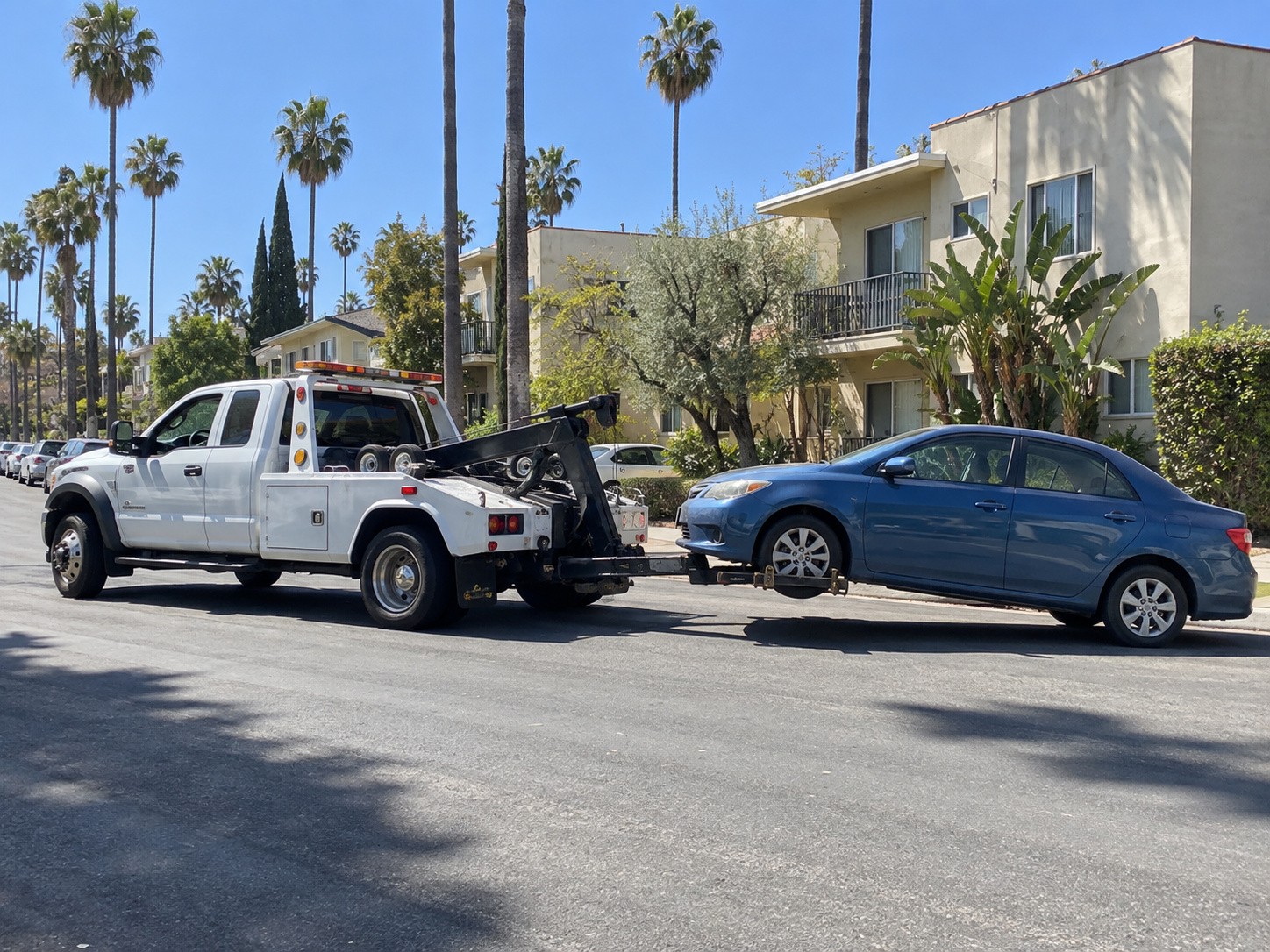

  • How to Choose a Reliable Towing Company: What to Look For Before You Need One

    How to Choose a Reliable Towing Company: What to Look For Before You Need One

    Nobody ever plans to need a towing company. It’s one of those services that most drivers never think about until the moment they desperately need it: stranded on the side of a busy freeway, stuck in a parking lot with a dead engine, or dealing with the aftermath of a fender bender on a rainy night. And when that moment comes, the last thing you want to be doing is frantically searching through your phone trying to figure out which towing company to call, with no idea who is reliable, who is affordable, and who is going to show up and actually do a good job.

    Short answer: A reliable towing company answers the phone, gives you an honest arrival time and a clear price before the truck comes, sends the right truck for your vehicle (a flatbed for all-wheel drive cars), and knows the local roads. Save the number before you need it. In North Hollywood, Rosario Swift Towing Services is at (747) 877-8577.

    The smart move is to find a reliable towing company before you ever need one. Having a trusted towing company’s number already saved in your phone means that when an emergency strikes, you can make one quick call and know that help is on the way: no stressful searching, no uncertainty, and no unpleasant surprises.

    But with so many towing companies operating in the Greater Los Angeles area, how do you know which one to trust? In this guide, we walk you through the most important things to look for when choosing a reliable towing company, so you can make an informed decision before an emergency ever happens.

    1. Check Their Reputation and Reviews

    One of the first and most important things to look at when evaluating a towing company is their reputation. In today’s world, it has never been easier to find out what other customers think of a business. A quick search online will bring up reviews and ratings on platforms like Google, Yelp, and Facebook, giving you a clear picture of the experiences other drivers have had with that company.

    When reading reviews, pay attention to the overall rating but also look beyond it. Read through individual reviews to get a sense of the most common themes, both positive and negative. Are customers consistently praising the company for fast response times and professional service? Or are there recurring complaints about slow arrivals, unexpected charges, or poor communication? A pattern of consistent positive reviews is a strong indicator of a trustworthy and reliable company.

    Also pay attention to how the company responds to negative reviews. A towing company that responds to complaints professionally, takes responsibility, and works to resolve issues demonstrates a genuine commitment to customer satisfaction, which is a good sign.

    2. Look for a Company With Experienced Operators

    When it comes to towing, experience matters more than most people realize. Towing a vehicle incorrectly (whether it’s using the wrong equipment, attaching the tow hook to the wrong point on the vehicle, or misjudging the weight and balance of the load) can cause serious and costly damage to your vehicle. An experienced operator knows how to assess each situation quickly and correctly, choose the right approach, and execute the job safely and efficiently without putting your vehicle at risk.

    When evaluating a towing company, look for one that employs operators with genuine hands-on experience handling a wide range of vehicles and roadside situations. Customer reviews are a great place to find this information: drivers who have had positive experiences with a company’s operators will often mention their professionalism, knowledge, and careful handling of their vehicle in their reviews.

    Experience also matters when it comes to more complex situations such as accident recovery, winch outs, and heavy-duty towing. These jobs require a higher level of skill and judgment than a standard light-duty tow, and entrusting them to inexperienced operators can lead to outcomes that make a bad situation even worse. Always choose a company whose operators have the experience and expertise to handle your specific situation correctly and safely.

    3. Look for a Company That Offers the Services You Need

    Not all towing companies offer the same range of services. Some specialize only in light-duty towing for standard passenger vehicles, while others have the equipment and expertise to handle medium-duty and heavy-duty towing for larger commercial vehicles. Some companies also offer a full range of roadside assistance services such as flat tire changes, jump starts, fuel delivery, car lockout service, and winch outs, while others only offer basic towing.

    Before choosing a towing company, think about the types of vehicles you drive and the kinds of roadside situations you are most likely to encounter. If you drive a standard passenger car, a company offering light-duty towing and basic roadside assistance may be sufficient. If you operate a commercial fleet or drive larger vehicles, you’ll want to make sure the company has the equipment and experience to handle medium or heavy-duty towing as well.

    Choosing a company that offers a comprehensive range of services means you only ever need to make one call, regardless of what type of roadside emergency you’re dealing with.

    4. Ask About Their Response Time

    When you’re stranded on the side of the road, every minute feels like an eternity. Response time is one of the most critical factors to consider when choosing a towing company. A company that takes hours to respond is not going to be much help in an emergency situation, no matter how good their other qualities may be.

    When evaluating a towing company, ask about their average response times or look for mentions of response time in their customer reviews. A reliable towing company should be able to give you a realistic estimate of how quickly they can typically reach you in your area.

    Also consider the company’s location. A towing company that is based in or near your area will generally be able to reach you faster than one that is located far away. For drivers in North Hollywood and the surrounding Greater Los Angeles area, choosing a locally based towing company is always going to be the faster and more practical option.

    5. Look for Transparent and Honest Pricing

    Unexpected charges and hidden fees are unfortunately a common complaint when it comes to some towing companies. Being towed is already an unpleasant and stressful experience. The last thing you need is to be hit with a bill that is significantly higher than what you expected or were quoted.

    When evaluating a towing company, look for one that is upfront and transparent about their pricing. A trustworthy company will give you a clear quote before any work begins and will explain any additional charges that may apply to your specific situation. They should never pressure you into agreeing to services without first discussing the cost clearly and honestly.

    Be cautious of companies that are vague about pricing, refuse to give a quote upfront, or seem evasive when you ask about costs. These are red flags that could indicate a company that engages in predatory pricing practices, something that unfortunately does exist in the towing industry.

    6. Evaluate Their Customer Service

    The way a towing company treats you, from the moment you first call them to the moment your vehicle is safely delivered, says a lot about their overall professionalism and reliability. Good customer service in the towing industry means being responsive, communicative, respectful, and genuinely focused on helping you through a stressful situation.

    When you first contact a towing company (whether it’s a call, a web inquiry, or a visit to their website) pay attention to how they communicate. Are they easy to reach? Do they answer your questions clearly and patiently? Do they seem genuinely interested in helping you, or do they seem dismissive and disinterested?

    A company that treats you well when you’re just making an inquiry is much more likely to treat you well when you’re in the middle of a roadside emergency. First impressions count, and the quality of a company’s customer service is often a reliable indicator of their overall professionalism and commitment to doing a good job.

    7. Check That They Have the Right Equipment

    A towing company is only as good as the equipment they use. Modern, well-maintained tow trucks and professional-grade roadside assistance equipment are essential for providing safe, effective, and damage-free towing and roadside services. A company that operates old, poorly maintained equipment is putting your vehicle at risk every time they hook it up to a tow truck.

    When evaluating a towing company, look for mentions of their fleet and equipment: either on their website, in their customer reviews, or by asking them directly. A company that invests in maintaining a modern, well-equipped fleet is demonstrating a commitment to quality and professionalism that should give you confidence in their ability to handle your vehicle safely.

    Also consider whether the company has the right type of equipment for your specific vehicle. For example, all-wheel drive and four-wheel drive vehicles should ideally be transported on a flatbed tow truck to avoid potential drivetrain damage. A company that only operates wheel-lift tow trucks may not be the right choice for these types of vehicles.

    8. Choose a Local Company That Knows the Area

    There is a significant advantage to choosing a towing company that is locally based and knows the roads, neighborhoods, and traffic patterns of your area well. A local towing company can reach you faster, navigate more efficiently to your destination, and is more likely to be familiar with the local repair shops and facilities in the area, which can be helpful when you need a recommendation for where to take your vehicle.

    Local companies also tend to have a stronger incentive to maintain a good reputation within their community. A locally based towing company relies on the trust and loyalty of drivers in their area, which means they have a much greater motivation to provide consistently excellent service compared to a large, impersonal national operation.

    For drivers in North Hollywood and the surrounding Greater Los Angeles area, choosing a locally based towing company like Rosario Swift Towing Services means faster response times, better local knowledge, and a team that genuinely cares about serving its community well.

    9. Save Their Number Before You Need It

    Once you’ve done your research and found a towing company you trust, save their number in your phone right away, before you ever need it. This simple step can make an enormous difference in a roadside emergency. Instead of scrambling to find a reliable company while stressed and stranded, you can make one quick, confident call to a company you’ve already vetted and chosen.

    It’s also a good idea to share the number with family members, particularly those who are new drivers, elderly, or who frequently drive alone. Having a trusted towing company’s contact information readily available gives everyone in your household peace of mind on the road.

    Red Flags to Watch Out For

    Just as important as knowing what to look for in a good towing company is knowing the warning signs of a bad one. Here are some red flags that should make you think twice:

    No Online Presence or Reviews: A legitimate towing company should have some kind of online presence, whether it’s a website, a Google Business listing, or social media. A complete absence of any online information or reviews is a warning sign.

    Vague or Evasive Pricing: Any company that refuses to give you a clear quote upfront or is deliberately vague about costs should be approached with caution.

    Unprofessional Communication: If a company is rude, dismissive, or difficult to communicate with from the very first interaction, that is a strong indicator of the kind of service you can expect when you actually need their help.

    Unusually Low Prices: While everyone wants a good deal, prices that seem too good to be true often are. An unusually low quote can be a sign of hidden fees that will appear later, or a company that cuts corners on the quality and safety of their service.

    What to Ask on the Phone

    A two-minute call tells you most of what you need to know about a towing company. Ask:

    • How much will it cost? You should get a clear price before the truck is sent.
    • When will the truck get here? An honest time is better than a promise that falls apart.
    • What kind of truck are you sending? All-wheel drive, low and damaged cars usually need a flatbed.
    • Where can you take my car? Your mechanic, a dealer, your home or a body shop.
    • How can I pay? So there are no surprises when the driver arrives.

    If the answers are vague, or nobody will give you a price, keep looking.

    Looking for a Reliable Towing Company in North Hollywood? Call Rosario Swift Towing Services.

    At Rosario Swift Towing Services, we check every box on this list. We are a locally based, experienced, and professional towing company serving North Hollywood and the surrounding Greater Los Angeles area. We offer a comprehensive range of towing and roadside assistance services, transparent pricing, fast response times, and the kind of friendly, professional customer service that has earned us the trust of drivers throughout our community.

    Don’t wait until you’re stranded to find a towing company you can rely on. Save our number in your phone today, (747) 877-8577, and have peace of mind knowing that when you need us, we’re just one call away.

    Frequently Asked Questions

    Why does a local towing company matter?

    A local company knows the freeways, the side streets and the parking rules around North Hollywood, so it finds you sooner and takes your car where it needs to go.

    Do I need a flatbed for my car?

    All-wheel drive cars, low cars, luxury cars and cars with heavy damage usually ride best on a flatbed. Tell us the make and model and we’ll send the right truck.

    How do I spot a towing scam?

    Be careful with a truck that shows up without being called, a driver who won’t give a price before towing, or anyone who asks you to sign a blank form.

    Do you tow box trucks and semis too?

    Yes. We handle light-duty, medium-duty and heavy-duty towing, from cars to box trucks, semis and RVs.

    Related Services

    Looking for a Towing Company in North Hollywood?

    (747) 877-8577

    Available day and night. Or send a quote request and we’ll call you back.
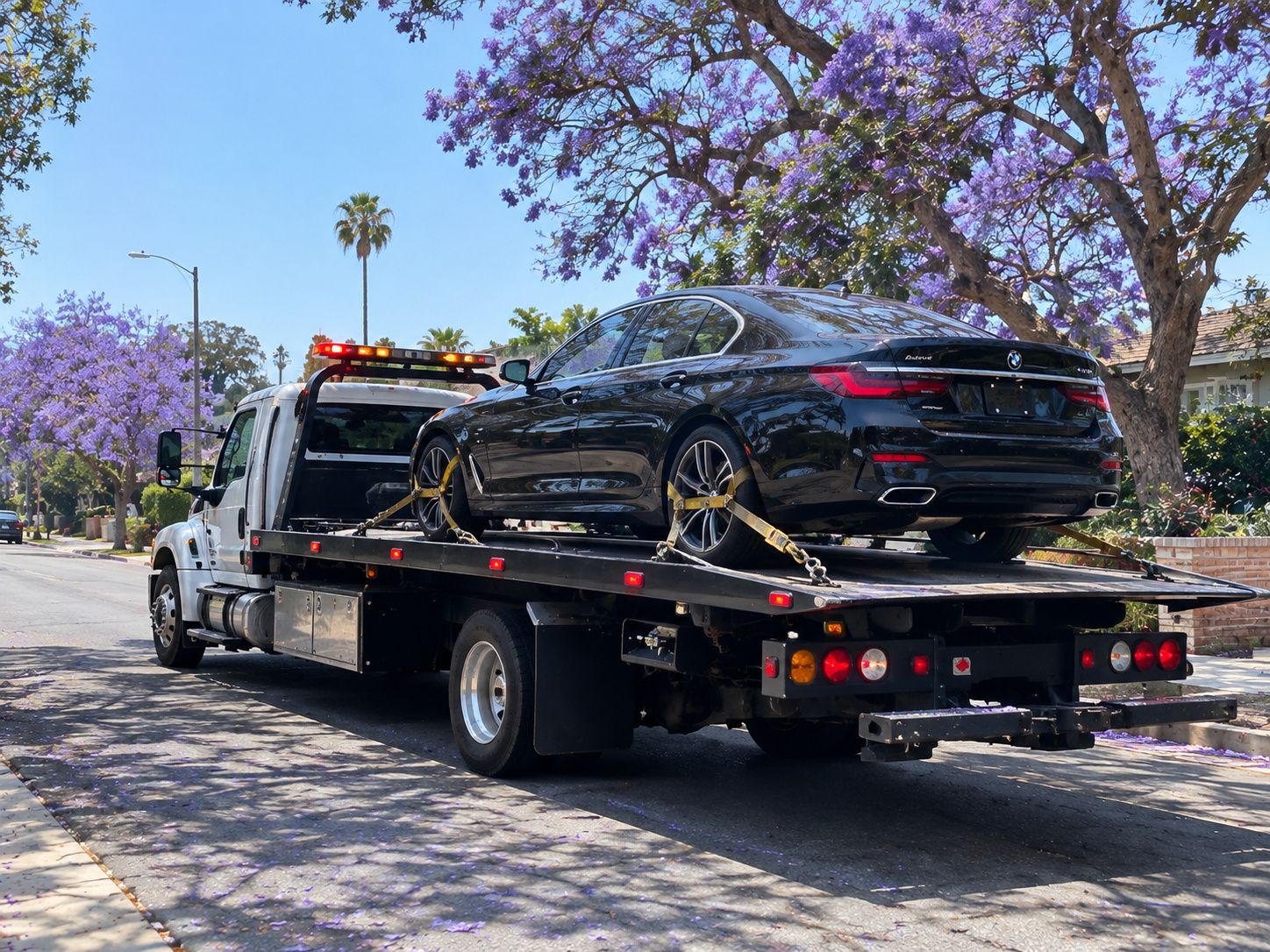

  • What to Do When Your Car Breaks Down: A Step-by-Step Guide

    What to Do When Your Car Breaks Down: A Step-by-Step Guide

    No matter how well you maintain your vehicle, a breakdown can happen to anyone, at any time, and in any place. It could be on a busy freeway during rush hour, on a quiet street late at night, or in the middle of an unfamiliar neighborhood far from home. Whatever the circumstances, a car breakdown is always an unwelcome and stressful experience: but how you respond to it can make a significant difference to your safety, the safety of other drivers around you, and the condition of your vehicle.

    Short answer: If your car breaks down, get as far right as you safely can, turn on your hazards and stay buckled in with the doors locked, unless the car is unsafe. Then call with your exact location: the freeway, your direction and the nearest exit, or the cross streets. If anyone is hurt or a lane is blocked, call 911 first. For a tow in North Hollywood, call (747) 877-8577.

    Many drivers are simply not sure what to do when their car breaks down. In the heat of the moment, panic can set in and lead to decisions that make the situation worse rather than better. That’s why it’s so important to know in advance what steps to take if you ever find yourself stranded on the road. Being prepared and knowing exactly what to do can help you stay calm, stay safe, and get the situation resolved as quickly and smoothly as possible.

    In this guide, we walk you through exactly what to do when your car breaks down, step by step, so you’re ready if it ever happens to you.

    Step 1: Stay Calm and Don’t Panic

    The first and most important thing to do when your car breaks down is to stay calm. It’s completely natural to feel frustrated, anxious, or even scared when your vehicle suddenly stops working, especially if it happens in a busy or unfamiliar location. However, panicking will not help the situation and can actually lead to poor decisions that make things worse.

    Take a deep breath, remind yourself that breakdowns happen to drivers every single day, and focus on the steps you need to take to get through the situation safely. A calm and clear head is your most valuable asset when dealing with a roadside emergency.

    Step 2: Get Your Vehicle Off the Road Safely

    As soon as you realize your vehicle is experiencing a problem, your first priority should be to get it off the road and away from moving traffic as quickly and safely as possible. If your vehicle is still moving, gradually reduce your speed and steer it towards the nearest safe area: ideally an exit ramp, a parking lot, a side street, or at the very minimum the road shoulder.

    Do not brake suddenly or make sharp, erratic steering movements, as this can startle other drivers and increase the risk of an accident. Use your turn signal to let other drivers know you are moving to the side of the road, and aim for as much distance from moving traffic as you can safely achieve.

    If your vehicle has completely stopped and cannot be moved, do your best to ensure it is as far to the right side of the road as possible and away from the flow of traffic. Even a few extra feet of distance from moving vehicles can make a significant difference to your safety.

    Step 3: Turn On Your Hazard Lights Immediately

    The moment you realize something is wrong with your vehicle, even before you have fully stopped, turn on your hazard lights. Also known as emergency flashers, hazard lights make your vehicle highly visible to other drivers on the road, alerting them that your vehicle is stationary or moving slowly and that they need to proceed with caution.

    Your hazard lights should remain on for as long as your vehicle is stationary on or near the road, even if you think you are in a reasonably safe location. Visibility is critical, especially in low light conditions, bad weather, or on high-speed roads where other drivers may have very little time to react to a stationary vehicle.

    Step 4: Make Your Vehicle More Visible

    In addition to your hazard lights, there are other steps you can take to make your vehicle more visible to passing traffic, particularly if it is dark, foggy, or raining. If you have them available in your vehicle, setting up road flares, reflective triangles, or emergency cones behind your vehicle can give other drivers additional warning that your vehicle is stationary ahead.

    Place these warning devices at least 50 to 100 feet behind your vehicle so that approaching drivers have enough distance to see them and react safely. If you don’t have any of these items in your vehicle, now is a great time to consider adding a basic emergency roadside kit to your car. It’s a small investment that can make a big difference in an emergency situation.

    Step 5: Stay Inside Your Vehicle if It Is Safe to Do So

    Once your vehicle is off the road and your hazard lights are on, in most situations the safest place for you to be is inside your vehicle with your seatbelt fastened. This may seem counterintuitive, many people’s instinct is to get out of the car immediately, but a stationary vehicle on the side of the road provides a significant amount of protection compared to standing outside, particularly on busy roads and freeways where passing vehicles may come dangerously close.

    If you are on a high-speed road such as a freeway, staying inside your vehicle is especially important. Statistics show that pedestrians on freeways are at extremely high risk of being struck by passing vehicles. Unless your vehicle is in immediate danger, such as if it is on fire or at risk of being hit, stay inside, keep your seatbelt on, and wait for help to arrive.

    If you do need to exit the vehicle for any reason, always exit from the side away from traffic, stay as far from the road as possible, and never stand directly behind or in front of your vehicle.

    Step 6: Call for Help

    Once you are safely positioned and your vehicle is as visible as possible to other road users, it’s time to call for help. There are a few options available to you depending on your situation:

    Call a Towing Company: If your vehicle cannot be driven, calling a reliable local towing company is usually the fastest and most practical solution. A professional towing company like Rosario Swift Towing Services can dispatch a tow truck to your location quickly and transport your vehicle to the repair facility of your choice. In North Hollywood and the surrounding Greater Los Angeles area, you can reach us at (747) 877-8577.

    Call a Roadside Assistance Provider: If you have a roadside assistance membership through your auto insurance, vehicle manufacturer, or a third-party provider, call them to report your breakdown and request assistance. Keep in mind that response times can vary significantly depending on the provider and your location.

    Call a Friend or Family Member: If you are not in immediate danger and prefer to wait for someone you know to come and help, calling a trusted friend or family member is always an option. However, keep in mind that depending on where you are, it may take them a significant amount of time to reach you.

    Call 911 if Necessary: If you or anyone else involved is injured, if your vehicle is in a dangerous position that poses an immediate risk to other drivers, or if you feel unsafe for any reason, do not hesitate to call 911. Your safety always comes first.

    Step 7: Provide Your Exact Location

    When you call for help, being able to provide your exact location is incredibly important. The faster the towing company or emergency services can locate you, the faster help will arrive. Here are some tips for identifying and communicating your location:

    Look for road signs, highway markers, mile markers, or exit signs nearby and relay that information to the dispatcher. If you are on a named street, note the street name and the nearest cross street or intersection. If you are in an unfamiliar area with no visible landmarks or signs, use your smartphone’s GPS or maps application to find your coordinates or share your location directly with the dispatcher. The more specific and accurate the location information you can provide, the faster help will reach you.

    Step 8: Do Not Attempt Repairs on a Busy Road

    Unless the fix is extremely simple (such as changing a flat tire in a safe, off-road location with plenty of space) it is generally not a good idea to attempt to repair your vehicle on the side of a busy road. Working on a vehicle near moving traffic is dangerous, even with hazard lights on and warning devices in place.

    If the repair requires you to spend any significant amount of time outside of your vehicle near the road, it is much safer to wait for a professional towing service to transport your vehicle to a repair shop where the work can be carried out in a controlled and safe environment. The cost of a tow is almost always worth it compared to the risk of attempting roadside repairs near fast-moving traffic.

    Step 9: Be Cautious of Strangers Who Offer Help

    While most people who stop to offer help are genuinely well-meaning, it’s important to exercise caution when dealing with strangers in a roadside situation. If someone stops and offers to help, you are not obligated to accept. You can politely thank them and let them know that help is already on the way.

    If you feel uncomfortable or unsafe at any point, stay inside your vehicle with your doors locked and call 911. Trust your instincts, your personal safety is always the top priority.

    Step 10: Follow Up With a Mechanic

    Once your vehicle has been safely towed to a repair facility, make sure to follow up promptly with a mechanic to get it properly inspected and repaired. Even if the breakdown seemed minor, it’s worth having a professional thoroughly check the vehicle to identify any underlying issues that may have contributed to the breakdown or that could cause problems down the road.

    Regular vehicle maintenance is the best way to reduce the risk of unexpected breakdowns. Keeping up with scheduled oil changes, tire rotations, battery checks, and other routine maintenance tasks goes a long way toward keeping your vehicle reliable and road-worthy.

    Be Prepared Before a Breakdown Happens

    The best time to prepare for a breakdown is before one ever happens. Here are a few simple things you can do to be better prepared for a roadside emergency:

    Keep an Emergency Kit in Your Vehicle: A basic roadside emergency kit should include items such as a reflective triangle or road flares, a flashlight and extra batteries, a basic first aid kit, jumper cables or a portable jump starter, a blanket, a bottle of water, and a phone charger or portable power bank.

    Save Important Numbers in Your Phone: Keep the contact numbers for a reliable local towing company, your roadside assistance provider, and a trusted mechanic saved in your phone so you can reach them quickly in an emergency without having to search for the information.

    Stay on Top of Vehicle Maintenance: Regularly servicing your vehicle and addressing any warning lights or unusual sounds promptly is the single most effective way to reduce the likelihood of an unexpected breakdown.

    Know Your Vehicle: Familiarize yourself with your vehicle’s warning lights and what they mean, where the spare tire and jack are located, and how to perform basic tasks like checking tire pressure and fluid levels. A little knowledge goes a long way in an emergency.

    Where Breakdowns Happen Around North Hollywood

    Most of the breakdown calls we get in the East Valley come from the same few kinds of places:

    • The 170 and the 101/134 interchange, where traffic merges fast and the shoulders are narrow
    • Lankershim, Magnolia and Laurel Canyon Boulevards at rush hour, when one stalled car blocks a full lane
    • Parking structures in the NoHo Arts District and Universal City, where a battery can die after a long day parked
    • The Cahuenga Pass on the 101, where the climb toward Hollywood is hard on engines that already run hot
    • Residential streets with permit parking, where a car that won’t start may need to be moved quickly

    On a city street, give us the nearest cross streets. On a freeway, tell us the direction (for example, the 170 southbound) and the last exit you passed.

    Broken Down in North Hollywood or the Greater LA Area? We’re Here to Help.

    If your vehicle has broken down and you need fast, reliable towing or roadside assistance in North Hollywood or the surrounding Greater Los Angeles area, Rosario Swift Towing Services is just one call away. Our experienced team is ready to respond quickly and get you the help you need. Give us a call at (747) 877-8577 or fill out our online form to request assistance. Stay safe out there, and remember, we’re here when you need us most.

    Frequently Asked Questions

    Should I call 911 or a tow truck first?

    If anyone is hurt, your car is stopped in a travel lane, or there is smoke or fire, call 911 first. If you’re safely on the shoulder or parked, call (747) 877-8577 for the tow.

    What if I don’t know exactly where I am on the freeway?

    Tell us which freeway, your direction and the last exit or sign you passed, or send the location pin from your phone. We can work with that.

    Can you tow my car to my own mechanic?

    Yes. Tell us the shop’s name or address when you call, and we’ll take your car there.

    How much does a tow cost?

    It depends on the vehicle, the distance and where it’s going. Call (747) 877-8577 and we’ll give you the price on the phone before we send a truck.

    Related Services

    Broken Down in North Hollywood?

    (747) 877-8577

    Available day and night. Or send a quote request and we’ll call you back.